Background: Young adults with childhood onset chronic conditions and their caregivers may find the health care transition (HCT) from pediatric to adult care stressful. Many receive limited transition preparation. To improve readiness for and comfort with adult care at our tertiary care combined adult and pediatric hospital, we developed an inpatient transition consultation (ITC) offering targeted transition counseling for hospitalized patients nearing or overdue for HCT. Consultations were completed by a combined medicine-pediatrics trained physician and a licensed clinical social worker.
Methods: We conducted an exploratory concurrent mixed methods qualitative study using a case study approach to determine patient/caregiver perception of the ITC to evaluate its efficacy. Eligible participants were English-speaking, 18 years of age or older, and had received an ITC during the current hospitalization. Data were collected via semi-structured interviews focused on patient and caregiver experience with the ITC, including content of the consult, concerns regarding HCT, and patient/caregiver next steps and via a modified standardized survey (Adolescent Assessment of Preparation for Transition – ADAPT). Transcripts were de-identified and inductively coded by two analysts; themes were identified through group consensus. Survey data were summarized using descriptive statistics.
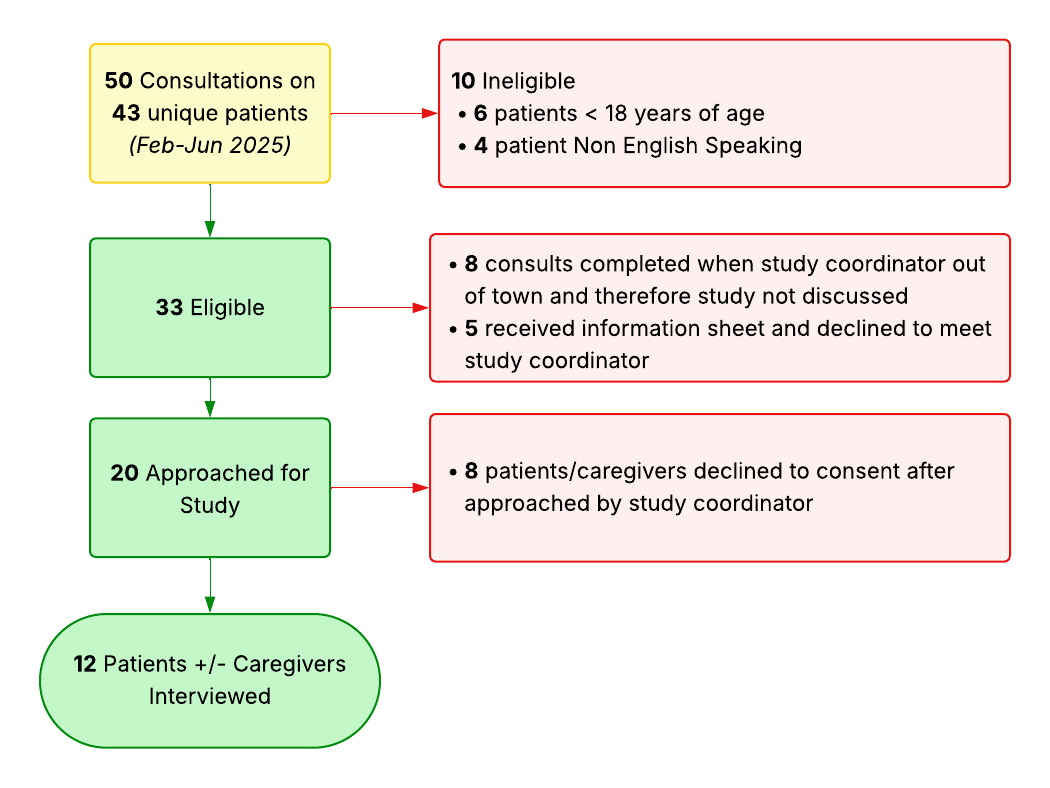
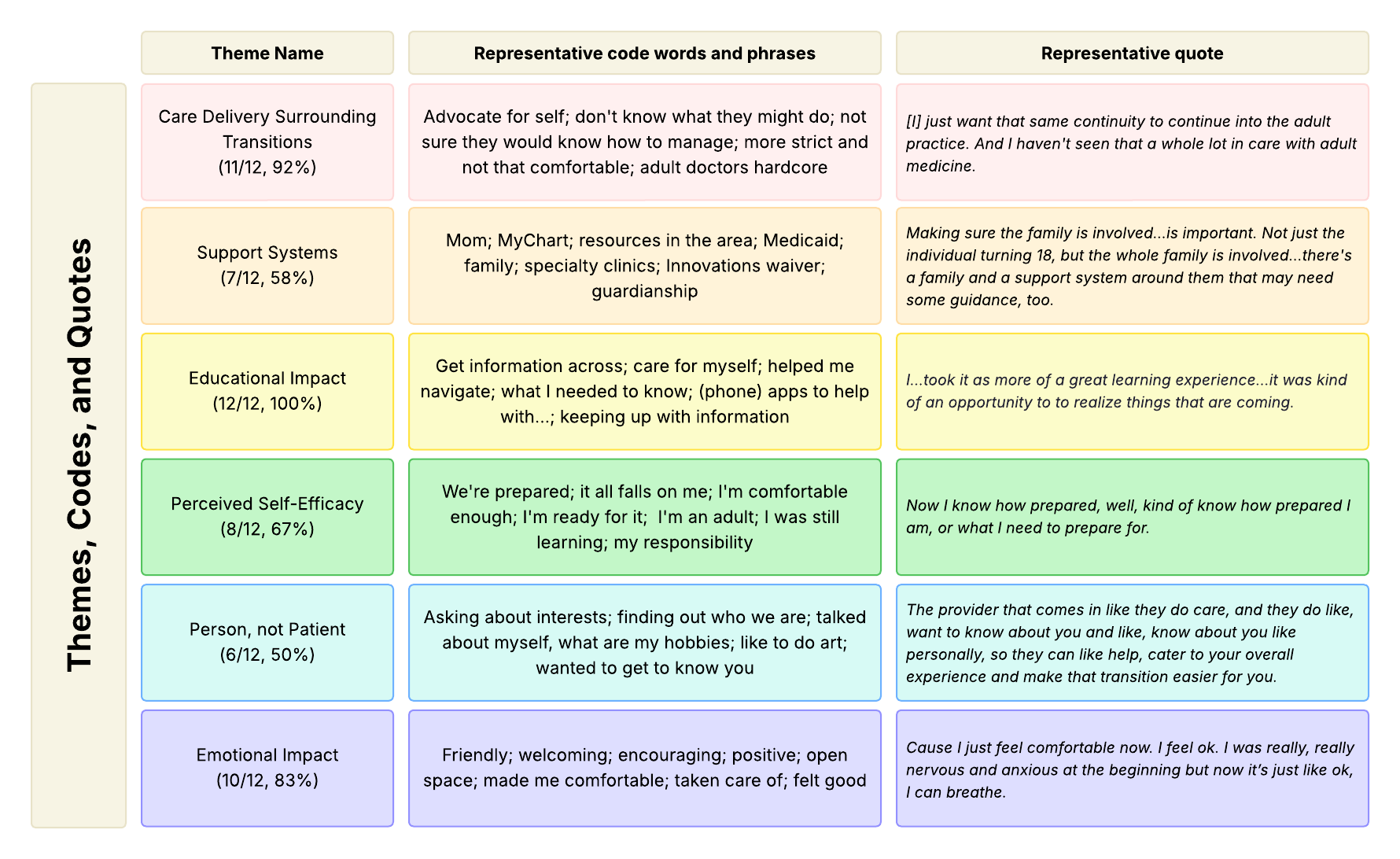
Results: Of 47 consultations, 39 patients were eligible for the study. Patients were approached for consent when patients demonstrated willingness to participate and study personnel were available. 20 patients were approached and 12 consented. Demographics of the study population are listed in Table 1. Results of the modified ADAPT survey are shown in Table 2. Qualitative analysis revealed themes which included patient and caregiver factors (increased introspection, concerns surrounding mental health and coping with chronic illness, personal and social barriers to care); health system factors (concerns regarding emergency care, comparisons between the pediatric and adult inpatient setting); provider factors (concern for unknown adult healthcare providers, appreciation for pediatric provider rapport); and ITC-specific factors (appreciation for therapeutic rapport; understanding of HCT focused education and counselling; appreciation for the holistic approach). Suggestions for improvement for the ITC included offering a copy of the interview questions in advance of consultation and providing more care management resources (e.g., instructions on how to fill out legal documents, how to apply for health insurance).
Conclusions: Overall, we found that most patients and caregivers had positive experiences with the ITC and perceived that they received transition counseling in both the qualitative analysis and in the modified ADAPT survey. Moreover, the qualitative analysis uncovered suggestions for improvements to the ITC, including increased resources surrounding self-management. Our findings suggest that patients and caregivers do not perceive discussions surrounding HCT to be stressful in the inpatient setting, but instead find them helpful for determining next steps in their care. Limitations of our study include small sample size and no representation of patients under the age of 18. Next steps include improving self-management resource availability for patients and caregivers.