Background: Bronchiolitis is the leading cause of hospitalization in infants under 12 months of age, most commonly due to Respiratory Syncytial Virus (RSV). With seasonal shifts in bronchiolitis since the pandemic and recent introduction of RSV immunoprophylaxis, it is important to monitor seasonal trends in bronchiolitis to better inform public health planning and resource allocation. Our aim was to describe trends in emergency department (ED) presentation and hospitalization rates for bronchiolitis during the 2018-2025 RSV seasons in the context of evolving RSV prevention strategies and seasonal shifts since the pandemic.
Methods: We conducted a retrospective cohort study of children aged ≤ 24 months who presented to a tertiary children’s hospital with a bronchiolitis diagnosis during RSV seasons (October–April) from 2018–2019 through 2024–2025, excluding 2020–2022 due to COVID-19-related disruptions. The primary outcome was hospital admission among ED-presenting bronchiolitis patients. Exclusions included patients with asthma, congenital heart disease, home oxygen dependence, and direct admissions. Presentation and admission rates were compared across seasons using chi-squared tests with Wilson score confidence intervals and Bonferroni correction.
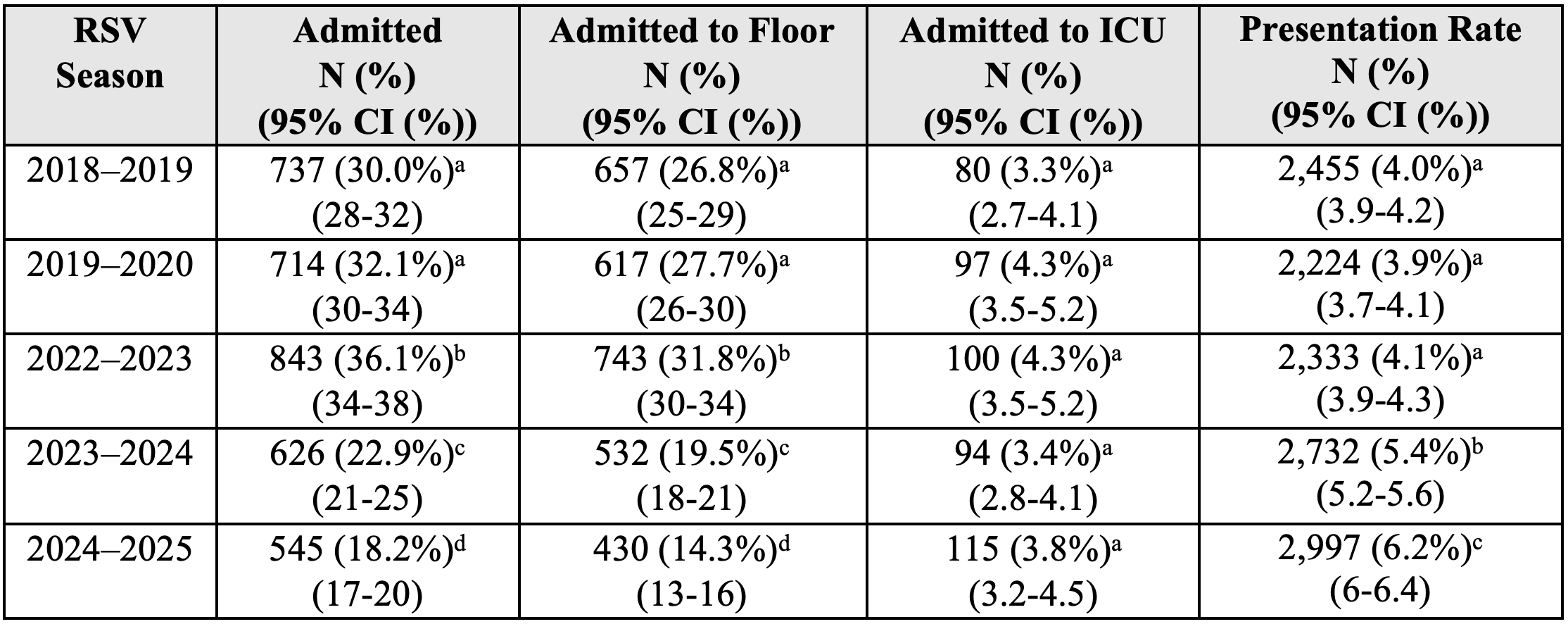
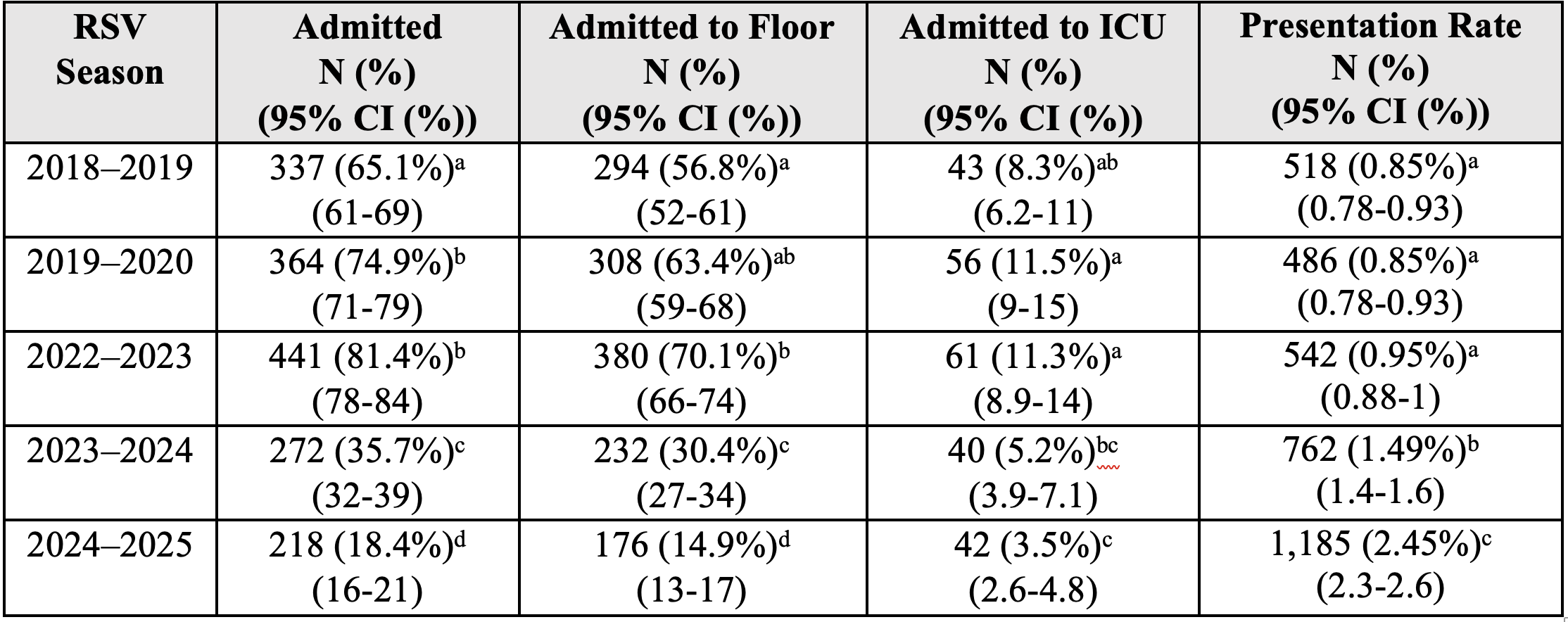
Results: Among 12,741 included patients, 3,493 had RSV-positive bronchiolitis. In the 2024–2025 season, bronchiolitis accounted for 6.2% (6.0%–6.4%) of ED visits, up from 4.0% (3.9%-4.2%) in the 2018–2023 seasons. Despite increased ED presentations, the proportion of bronchiolitis patients requiring hospitalization declined, while ICU admission rates remained stable. RSV testing among bronchiolitis patients increased from 35.8% (34.0%–38.0%) in 2018–2019 to 59.3% (57.0%-61.0%) in 2024–2025. Trends were consistent in age-stratified and RSV-positive subgroups.
Conclusions: Bronchiolitis presentation and hospitalization patterns have shifted in recent seasons, characterized by higher ED volumes but lower hospitalization rates. These trends persist amid increased RSV testing and the rollout of RSV immunoprophylaxis. The observed trends in bronchiolitis presentation and severity, regardless of RSV status, highlight the need for continued surveillance and flexible health system planning. Prospective studies should incorporate individual-level vaccine data and account for potential confounders such as social determinants of health and viral co-circulation to better understand the drivers of these shifts.