Background: Hospitalized adults frequently experience pain and other distressing symptoms that impede recovery and contribute to longer hospital stays. Pharmacologic treatments remain central to symptom management but carry risks such as side effects, tolerance, and polypharmacy. As hospitals increasingly adopt integrative, patient-centered care models, massage therapy (MT) has emerged as a promising non-pharmacologic intervention. Despite widespread outpatient use, the role of MT in acute inpatient care remains underexplored. This study evaluated whether a single standardized MT session is associated with improved symptoms and functional mobility among hospitalized adults.
Methods: This retrospective cohort study included adult inpatients (n=382) who received a standardized 30-minute bedside massage therapy (MT) session at a tertiary academic medical center between September 2024 and October 2025. MT was mainly provided to oncology and palliative care patients but was available to any inpatient with a consult. Primary outcomes—pain (n=269), anxiety (n=258), fatigue (n=251), and nausea (n=252)—were assessed immediately before and after MT using 10-point numeric rating scales administered by trained massage therapists, where 1 represents the least severe symptoms and 10 represents the most severe. Secondary outcomes included nursing-recorded average daily pain (n=300) and Activity Measure for Post-Acute Care (AMPAC) mobility scores (n=371), which were collected by nurses on the day before and the day after MT as part of routine clinical care. AMPAC scores range from 6 to 24, with higher scores indicating better functional mobility. Data with missing values or with zero scores both before and after the intervention were excluded from analysis. Paired t-tests were used to compare pre- and post-intervention scores for all outcomes.
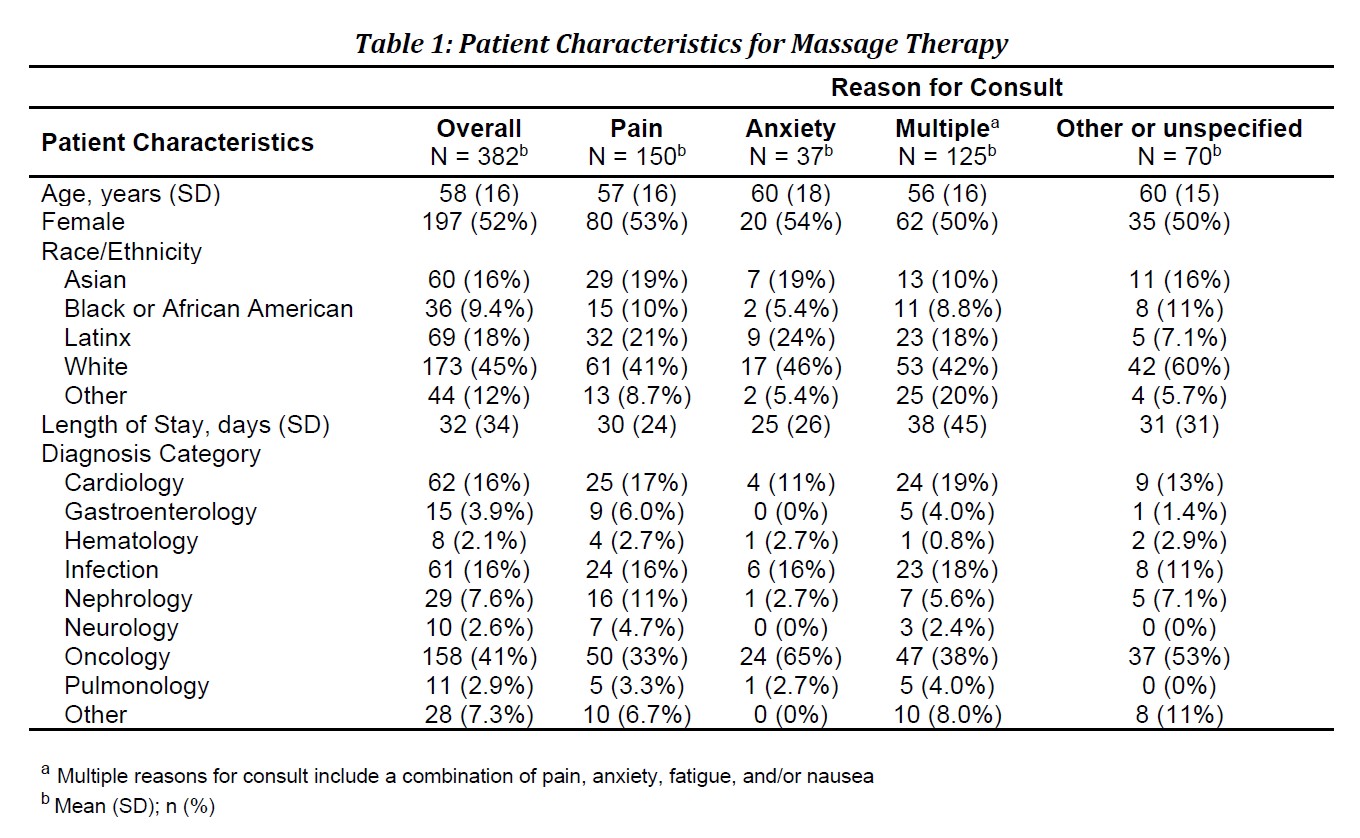
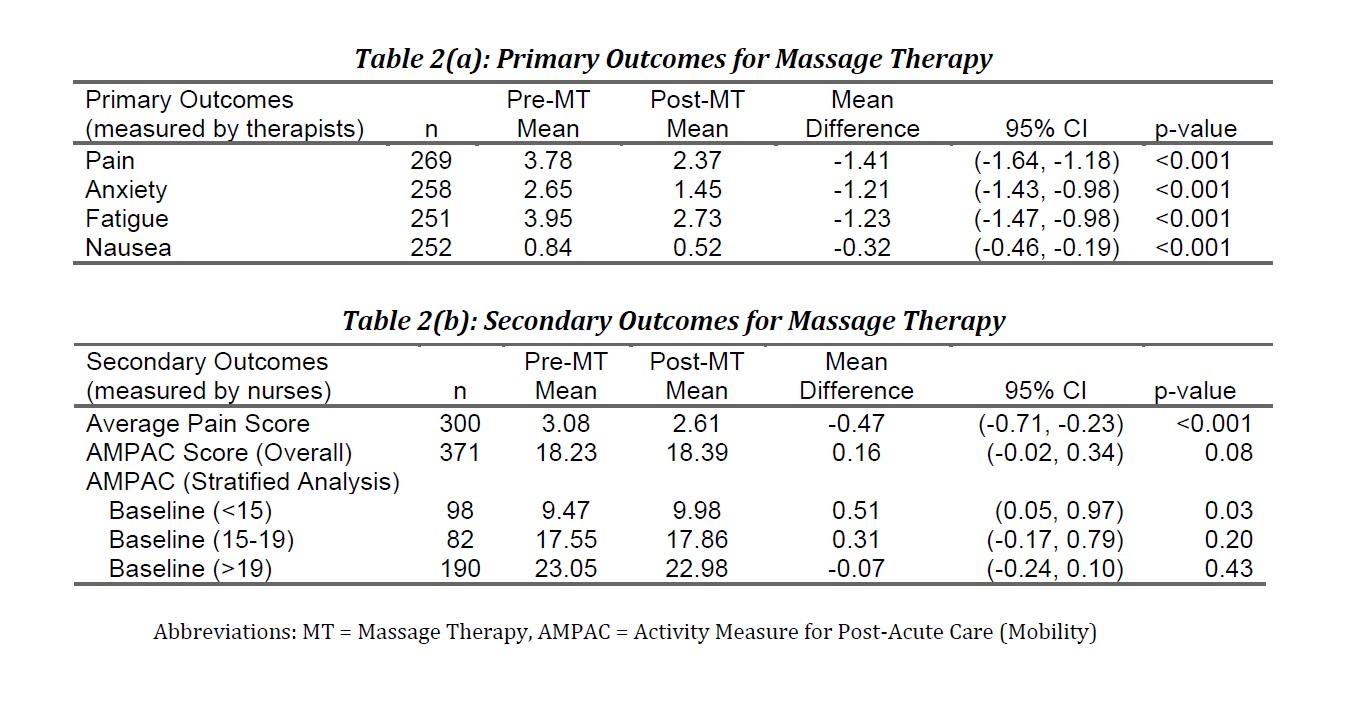
Results: Oncology patients represented the largest subgroup (41%), and the referrals were most commonly for pain (39%) (Table 1). Patients experienced statistically significant improvements across all symptoms assessed by massage therapists. Pain decreased from 3.78 to 2.37 (mean difference −1.41, 95% CI −1.64 to −1.18, p< 0.001), anxiety from 2.65 to 1.45 (−1.21, 95% CI −1.43 to −0.98, p< 0.001), fatigue from 3.95 to 2.73 (−1.23, 95% CI −1.47 to −0.98, p< 0.001), and nausea from 0.84 to 0.52 (−0.32, 95% CI −0.46 to −0.19, p< 0.001) (Table 2). Nursing-recorded average daily pain also improved, decreasing from 3.08 to 2.61 (mean difference −0.47, 95% CI −0.71 to −0.23, p< 0.001). Functional mobility changes varied by baseline status. Patients with baseline high (above 19) or moderate (15–19) AMPAC mobility scores did not show changes after treatment. In contrast, those who began with low baseline AMPAC scores (below 15) had a statistically significant improvement after massage (mean increase 0.51, 95% CI 0.05 to 0.97, p=0.03).
Conclusions: A single inpatient massage therapy session was associated with immediate improvements in pain, anxiety, fatigue, and nausea among hospitalized adults, and patients with low baseline mobility demonstrated greater improvement in functional recovery. As a next step, randomized controlled trials are recommended to clarify whether massage therapy plays a causal role in the symptom improvements observed.