Background: Hepatorenal syndrome-acute kidney injury (HRS-AKI), characterized by rapid deterioration in renal function, is a serious complication of decompensated cirrhosis and is associated with significant morbidity and mortality. While terlipressin is the only FDA-approved treatment in the U.S. for adults with HRS-AKI, real-world evidence on its use and outcomes remains limited. We conducted a retrospective cohort study using a large U.S. hospital dataset to assess real-world practice patterns of terlipressin use and associated outcomes in hospitalized adults with HRS-AKI.
Methods: Using the Premier Healthcare Database, we identified adult patients hospitalized with HRS-AKI who were treated with terlipressin for ≥ 2 days between Sep 2022 and May 2025. The diagnosis of HRS-AKI and treatment with terlipressin were determined using ICD-10-CM/PCS codes, National Drug Codes, and billing codes. We evaluated baseline demographics, clinical characteristics, treatment patterns and clinical outcomes including post-treatment return of serum creatinine (SCr) to ≤1.5mg/dL, in-hospital mortality and discharge status.
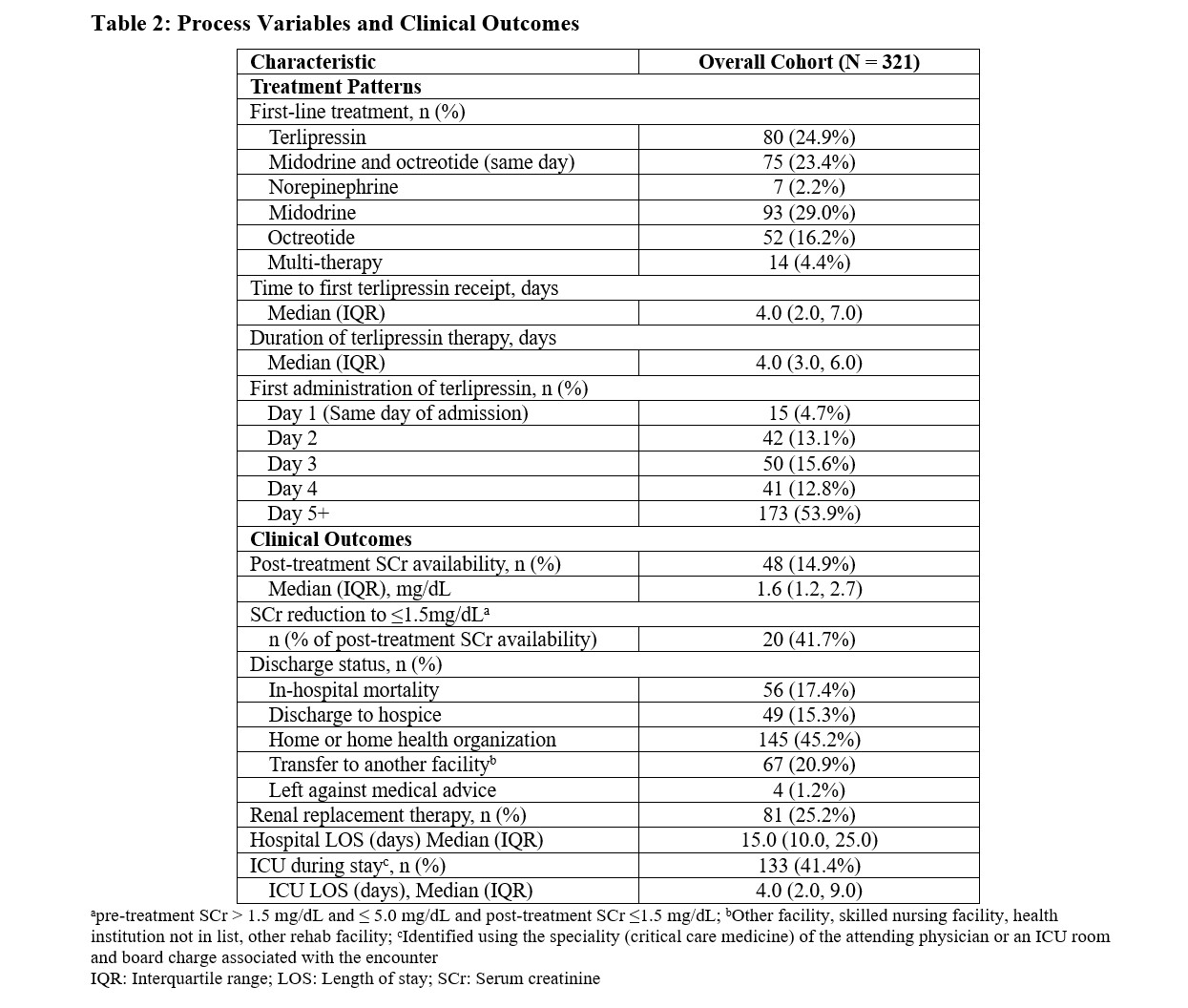
Results: Among 321 HRS-AKI patients treated with terlipressin for ≥2 days, median age was 57.0y (IQR 47.0, 66.0), 64.5% were male and 72.6% were hospitalized at high-volume centers (≥500 beds). Overall, the cohort was predominantly White (67.0%), and most patients were covered by Medicare (34.9%). Alcohol-associated liver disease (ALD) was the most common etiology of cirrhosis (70.7%). The median time to terlipressin initiation was 4.0 days (IQR 2.0, 7.0), and terlipressin treatment duration was 4.0 days (IQR 3.0, 6.0). First-line treatment consisted of terlipressin alone in 24.9% patients, same-day midodrine and octreotide in 23.4%, and norepinephrine in 2.2%. The remaining 49.6% received either midodrine or octreotide monotherapy or other combination regimens. In a subset of n=48 patients with available pre- and post-treatment SCr data, median pre-treatment SCr was 2.5mg/dL (IQR 2.1, 3.0); 41.7% (n=20) of patients achieved reduction in SCr to ≤ 1.5mg/dL post-treatment, with a median post-treatment SCr of 1.6 mg/dL (IQR 1.2, 2.7). Renal replacement therapy (RRT) was used in 25.2% of patients. In-hospital mortality was 17.4%. The median length of hospital stay was 15.0 days (IQR 10.0, 25.0); 15.3% were discharged to hospice, and 45.2% were discharged home.
Conclusions: In a large, real-world cohort of patients hospitalized with HRS-AKI, most were treated at large-volume centers, with ALD as the predominant underlying etiology. Terlipressin was used first-line in about a quarter of patients and was often initiated later in the hospitalization. These results point to the importance of earlier recognition and escalation to optimize HRS-AKI care pathways. A notable proportion of patients, 41.7% of those with available data, achieved a post-treatment SCr ≤1.5 mg/dL. Nearly half of all patients were discharged home, and improvements in kidney function were observed, indicating clinically meaningful outcomes among real-world terlipressin–treated patients with HRS-AKI.
.jpg)