Background: In-hospital cardiac arrests are often identified, led, and coordinated by internal medicine residents, making effective code leadership a core competency. Despite completing a full year of medical training, individual resident confidence in ACLS and cardiac resuscitation remains low. This project utilizes an interactive lecture series to improve the confidence and skills needed for a rising PGY-2 to responsibly run a medical code (ACLS), recognize cardiac rhythms and execute appropriate interventions.
Methods: Pre-intervention confidence in organizing, leading, recognizing, and managing cardiac arrest was assessed using a 5-point Likert scale, and knowledge of ACLS and institutional protocols was evaluated through multiple-choice questions. A 60-minute interactive, small-group lecture was conducted, where residents worked in teams to work through cases that progressed into cardiac arrest. This approach offered a controlled, low-acuity environment for residents to develop and refine clinical reasoning and decision-making skills. A post-test was administered after the session to evaluate an improvement in both knowledge and confidence. 6-month retention data is being collected. In addition, this lecture is being used as a resource for the ICU consult elective, which will include high-fidelity simulation training and real time RRT/Code experience to improve cardiac resuscitation efficacy and experience.
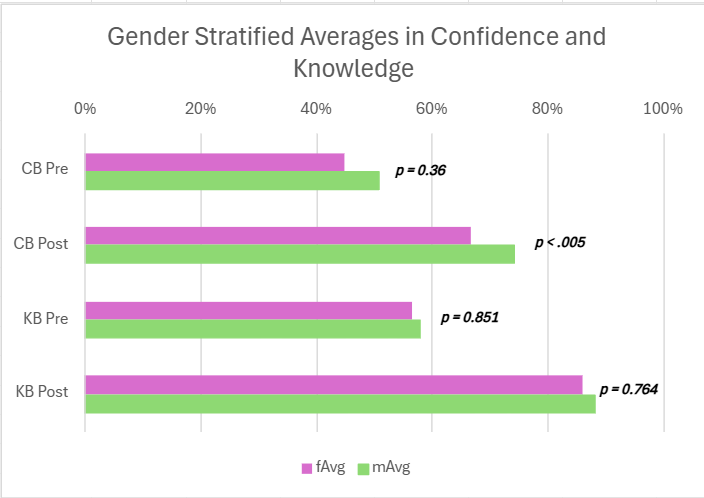
Results: 30 rising PGY-2 residents participated in this lecture, 14 identified as female, 13 identified as male, and 3 did not report gender. Results showed a statistically significant increase in both overall confidence (p< .001) and knowledge (p< .001) following the session. Post-lecture confidence was notably higher in male residents (p< .005), despite no significant differences in knowledge scores between genders at either the pre-test (p = 0.851) or post-test (p = 0.764). Six-month retention scores are currently being evaluated.
Conclusions: A structured, interactive educational session significantly improved both knowledge and self-reported confidence in cardiac arrest management among rising senior residents. The persistent gender-based confidence gap, despite equal foundational knowledge as well as post-intervention knowledge acquisition, underscores the need to integrate confidence-building strategies into clinical training. Long-term retention data will provide additional insight into the durability of this intervention and inform future curricular design. Furthermore, embedding this module within a longitudinal ICU elective, supported by simulation and real-time experiences, may help bridge the confidence gap and further prepare internal medicine residents to lead life-saving interventions with competence and clarity.
.png)