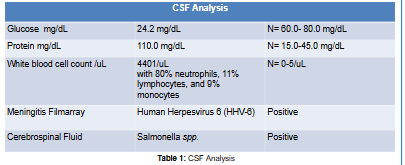
Case Presentation: 6-month-old male, born full-term without complications, presented with decreased oral intake and urination, irritability, vomiting, and fevers. History included facial rash six days prior, and diarrhea for three weeks. CBC, CMP, and urinalysis were unremarkable; CRP and Procalcitonin were elevated at 16.6 mg/dL and 15.0 ng/mL, respectively. CSF analysis demonstrated glucose of 24.2 mg/dL and protein of 110.0 mg/dL. WBC was 4401/uL with 80% neutrophils. Meningitis FilmArray was positive for HHV-6. Vancomycin and ceftriaxone empirically started. Meropenem was added as symptoms persisted. CSF eventually tested positive for moderate Salmonella. Treatment was readjusted to ceftriaxone, then ampicillin for four weeks total duration. Brain MRI demonstrated subarachnoid and leptomeningeal enhancement, suggestive of meningitis. He fully recovered with intact neurological function.
Discussion: Salmonella enterica is a gram-negative bacilli found in contaminated food. It can be divided into typhoidal and non-typhoidal Salmonella (NTS) servos. NTS strains typically lead to gastroenteritis. Salmonella meningitis predominantly affects infants aged under 1 year, with highest incidence in areas with inadequate sanitation and limited healthcare. Risk factors include prematurity, severe malnutrition, immunocompromised, and recent gastroenteritis that compromises the intestinal barrier, promoting bacterial translocation. HHV-6 has been studied for potentially exacerbating severity of infection, especially in immunocompromised individuals. HHV-6, well-known for causing Roseola, stays latent after primary infection. Its role extends beyond primary infections to affect immune responses, predisposing to more severe bacterial infections.
Conclusions: Salmonella meningitis is a rare, but serious consequence of Salmonella infection following gastroenteritis. HHV-6 may exacerbate infections by disrupting immune responses. Our case highlights the challenges associated with Salmonella meningitis in a previously healthy infant, preceded by gastroenteritis, and complicated by a HHV-6 co-infection.
.png)