Background: Sexual harassment encompasses unwelcome verbal and physical sexual attention, including gender-based behaviors in social settings. It violates fundamental human rights and poses a global issue for men and women. In medical communities, it has been linked to burnout, isolation, workforce attrition, and the perpetuation of unprofessional behaviors through medical education. In the U.S., annual prevalence among residents was 24.8% in women and 3.2% in men, with most cases going unreported despite knowledge of reporting methods. Although sexual harassment is recognized as an issue in Japan’s medical field, nationwide studies are lacking. This study aimed to investigate the prevalence and characteristics of sexual harassment among junior residents (PGY1&2) in Japan and to propose strategies for safer training environments.
Methods: We conducted a nationwide cross-sectional survey targeting first- and second-year postgraduate residents in Japan who completed the General Medicine In-Training Examination (GM-ITE) in 2023. An electronic survey collected data after obtaining participants’ informed consent. The response rate was 80%. The primary outcome was the prevalence of sexual harassment, with secondary outcomes including perpetrator characteristics and reporting behaviors. Descriptive statistics, chi-square/Fisher’s exact tests, and effect size calculations (Cohen’s d) were performed. Reliability was assessed with Cronbach’s alpha, and significance was set at p< 0.05 (two-tailed). Analyses were conducted using STATA 17.
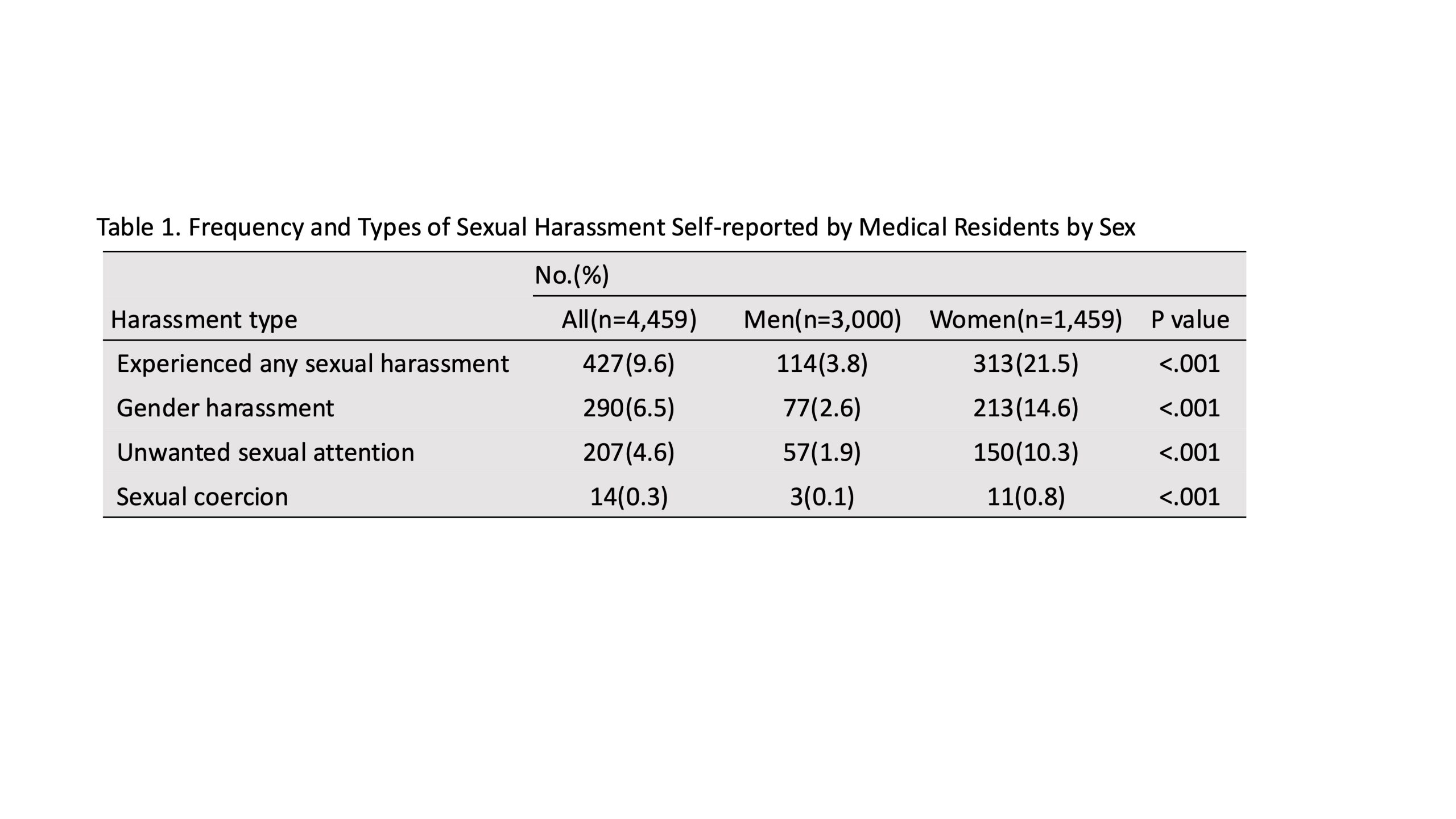
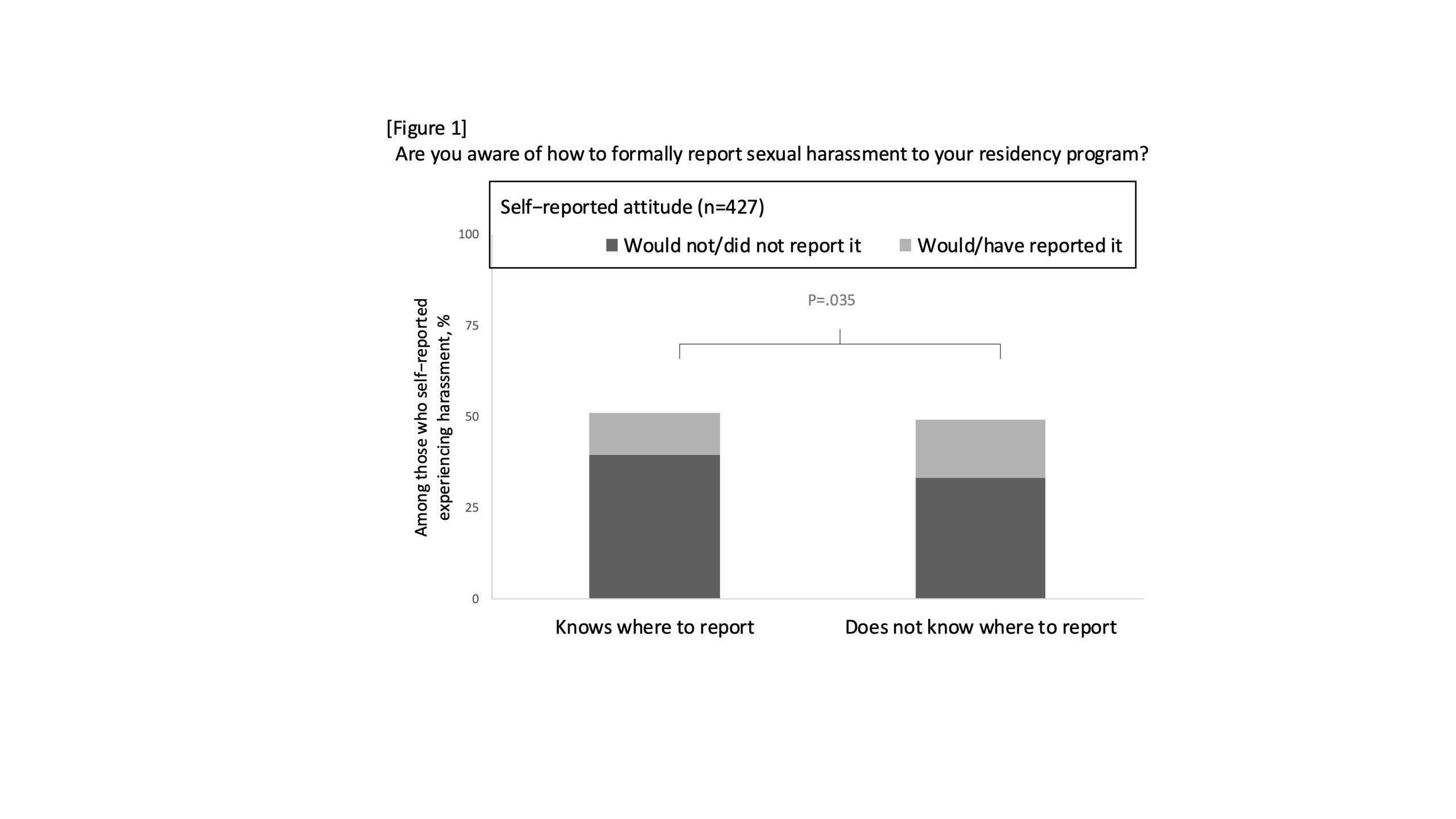
Results: The analysis included 4459 (male; 67.3%). The overall rate of any sexual harassment was 427 (9.6%), significantly higher among women residents (men; 3.8% vs. women; 21.5%, P< .001). The specifics of sexual harassment were gender harassment in 6.5% (men; 2.6% vs. women; 14.6%, p < .001), unwanted sexual attention in 4.6% (men; 1.9% vs. women; 10.3%, p < .001), sexual coercion in 0.3% (men; 0.1% vs. women; 0.8%, p < .001), all of which were significantly higher among women residents [Table 1].When those who encountered sexual harassment were asked to identify the perpetrators, the most common perpetrators were men senior doctors (260; 60.9%), and there was no difference between men and woman residents who were victimized (men; 59.6% vs. women; 61.3%). The next most common perpetrators were men patients (136; 31.9%) (men; 7.0% vs. women; 40.9%, p< 0,01), with women residents significantly more frequently encountered.In the group that encountered sexual harassment, 218 (51.1%) indicated that they knew the department in charge of reporting sexual harassment. Only 50 (11.7%) of the residents actually reported sexual harassment after experiencing it. Furthermore, regardless of their knowledge of the reporting department, the majority of respondents, 310 (72.6%), indicated that they would not report sexual harassment to the reporting department even if they encountered it [Figure 1].
Conclusions: Although 9.6% of Japan’s junior residents encountered sexual harassment during their initial training, the percentage of those who actually reported it was extremely low. In order to reduce the incidence of sexual harassment of residents, it is important to address barriers to reporting, improve training systems, and foster a supportive environment. Future research should also seek to elucidate the reasons why victims “would not report” in order to reduce sexual harassment during initial training and to improve the training environment and management systems.