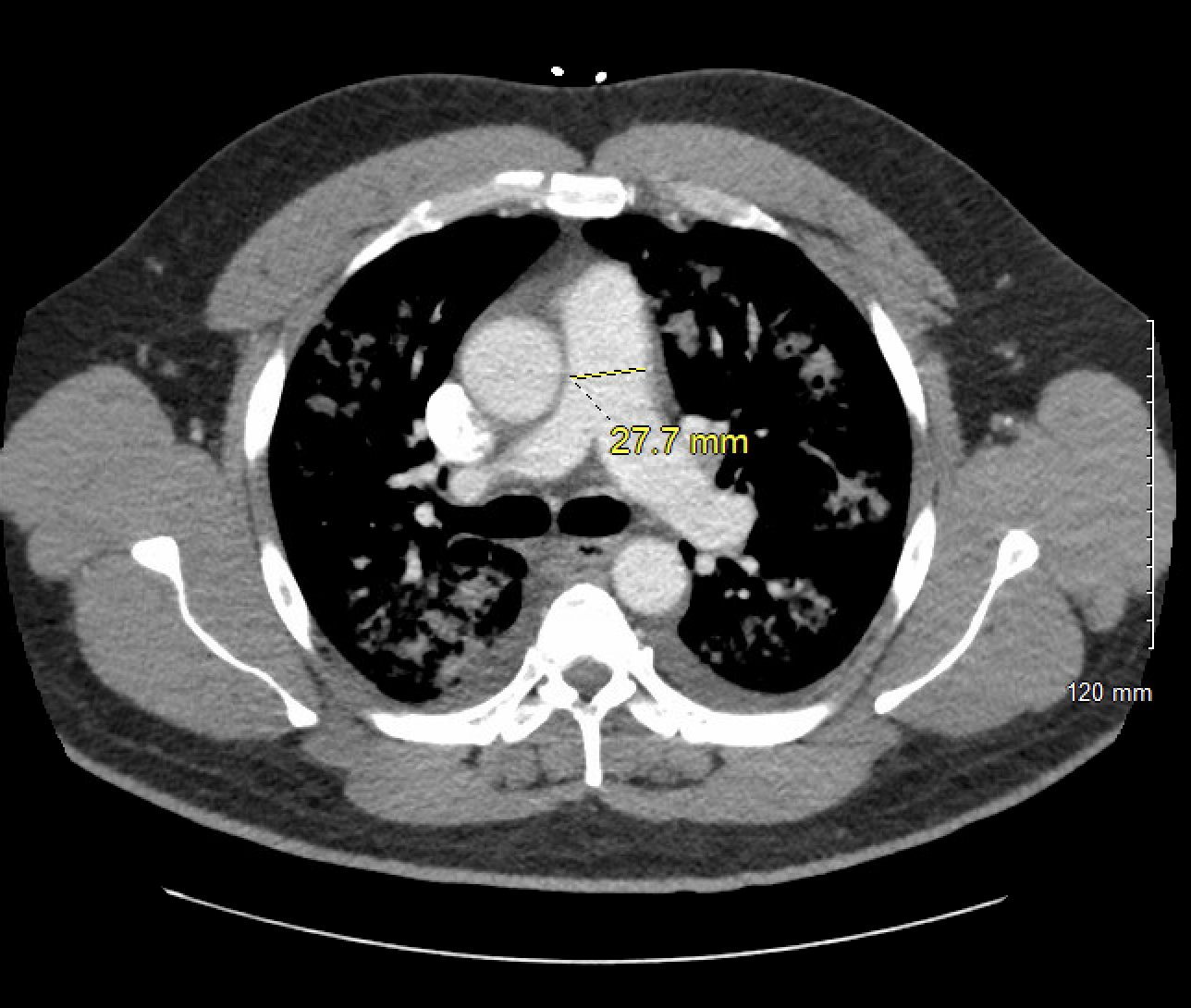
Case Presentation: A 41-year-old male weightlifter with past medical history of hypertension, hyperlipidemia, anabolic steroid use, and obstructive sleep apnea presented to the emergency department due to acute onset chest pain, and shortness of breath while lifting weights. Initial work-up showed mildly elevated troponins and BNP 1399 pg/mL, but no ischemic changes. Left heart catheterization demonstrated normal coronary arteries while Transthoracic echocardiography revealed severe aortic insufficiency, and CT angiography demonstrated a 4.9 cm aneurysm of the sinus of Valsalva with borderline ascending aortic dilation (3.8 cm). During the hospitalization, he developed acute hypoxemic respiratory failure secondary to multifocal pneumonia and ARDS, requiring intubation and ICU admission. He improved with intravenous antibiotics and diuretics. Following stabilization, cardiothoracic surgery performed aortic valve repair and aortic root reconstruction. Postoperatively, he managed carvedilol, amlodipine, and loop diuretics. Given his non-syndromic aneurysm and history of steroid use, genetic counseling and testing for isolated aortopathy were recommended.
Discussion: Anabolic androgenic steroids are commonly used by athletes and are commonly abused by athletes for muscle growth. While their cardiotoxic effects—hypertension, dyslipidemia, thrombosis, and cardiomyopathy—are well established; their role in aortic pathology is under-recognized. Anabolic androgenic steroids can disrupt the connective tissue integrity by increasing collagen cross-linking, impairing elastin synthesis, and promoting vascular stiffness, predisposing aneurysm formation, and valvular regurgitation. The combination of steroid-induced vascular changes and resistance training could amplify hemodynamic shear stress on the aortic root. This case illustrates a likely multifactorial aortic injury: chronic hypertension, supraphysiologic androgen exposure, and repetitive mechanical strain from powerlifting. Although syndromic causes such as Marfan or Loeys-Dietz syndromes were considered, the absence of phenotypic features and chronic AAS exposure favored steroid-associated aortopathy. Such cases may initially mimic acute coronary syndrome, delaying definitive diagnosis, and intervention.
Conclusions: This case highlights anabolic steroid use and intense resistance training as potential precipitants of non-syndromic aortic root aneurysm and severe aortic insufficiency in young adults. Clinicians should maintain a high index of suspicion for aortic pathology in patients presenting with chest pain and a history of AAS use, even without connective tissue disease. Early multidisciplinary evaluation—including cardiology, cardio-thoracic surgery, and genetics—is vital to improve outcomes and prevent catastrophic complications. Greater public awareness of the cardiovascular dangers of anabolic steroid abuse is warranted.