Background: Adults with dementia experience frequent care transitions, including transitions from hospital to skilled nursing facility (SNF) settings. Caregiver engagement is considered critical to optimizing care transitions for adults with dementia; however, the perspective of dementia caregivers on hospital-to-SNF transitions remains unexplored. The aim of this study was to understand dementia caregiver experiences and perceptions of the first few days of care during hospital-to-SNF transitions.
Methods: We conducted a qualitative study at a post-acute, urban SNF. We performed in-depth semi-structured interviews with the caregivers of older adults with dementia who had been admitted to the SNF from an acute care hospital. Caregivers were recruited prospectively during SNF stays. Interviews explored caregiver perceptions regarding their preparation for SNF care, the move from hospital to SNF, and general experiences with hospital and SNF care. We asked what went well and perceived challenges during hospital-to-SNF transitions. We used thematic analysis and a combination of deductive and inductive coding based on relevant literature. Codes were refined and organized into themes through group discussion.
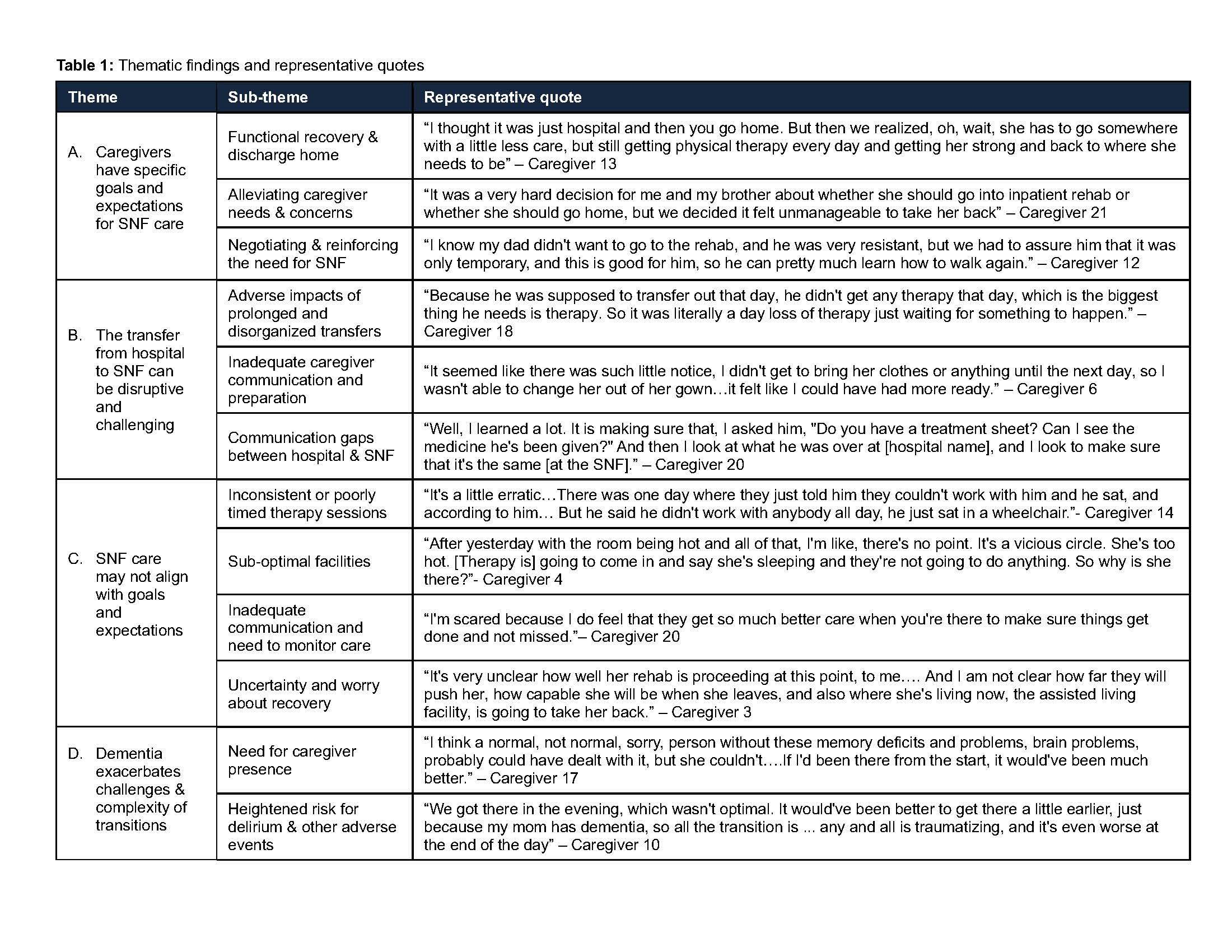
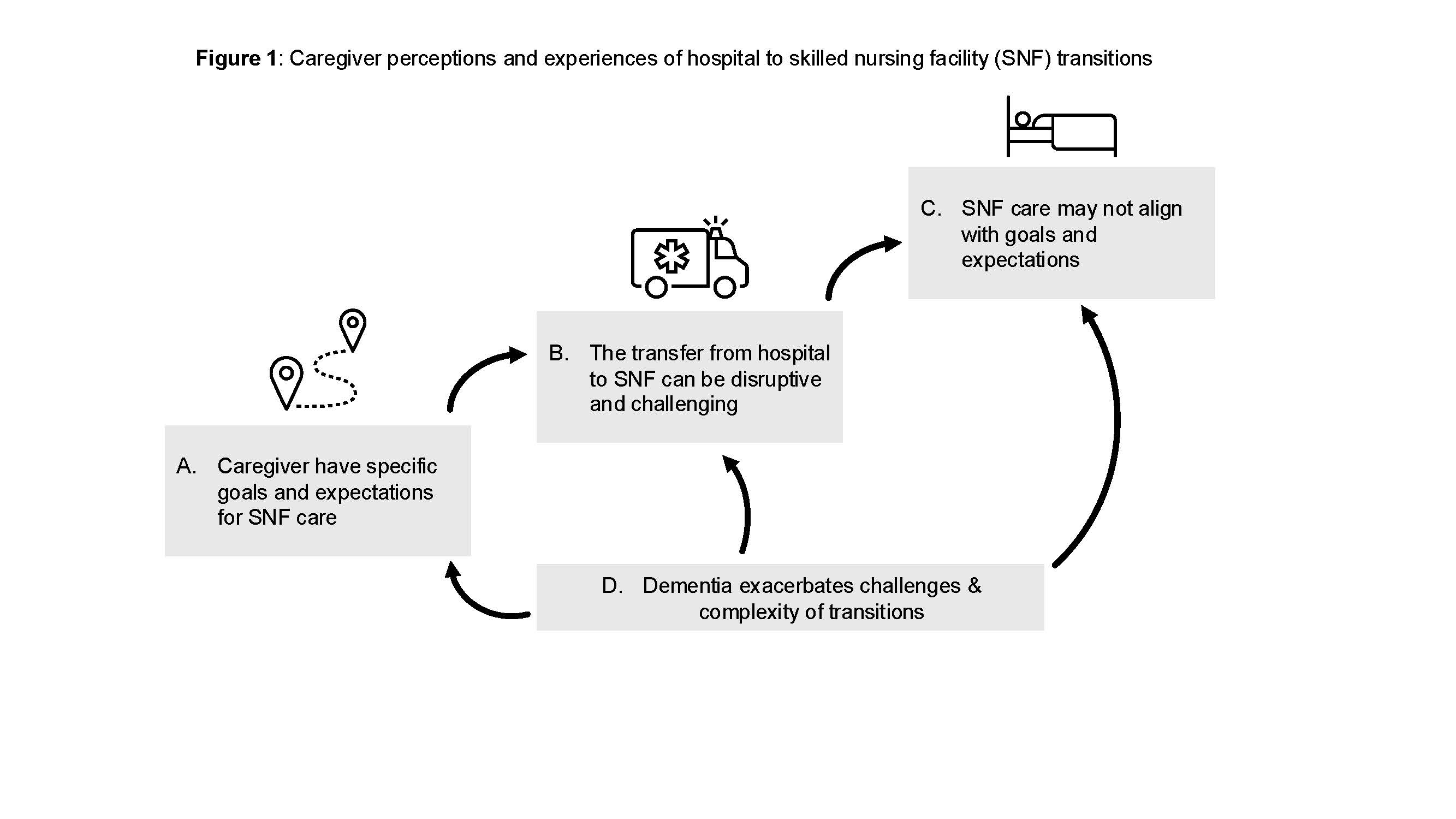
Results: We interviewed 20 caregivers. Of the 15 caregivers with available demographic data, the mean age was 61 years; most were White (11, 73%) and identified as the primary caregiver (67%). Four major themes were identified (Figure 1). Sub-themes and representative quotes are shown in Table 1. Caregivers expressed specific goals and expectations for SNF care (Theme A); these goals frequently focused on functional recovery and eventual discharge home, but some caregivers also anticipated that SNF stays could help alleviate caregiver needs and concerns. Some also described the need to negotiate and reinforce the need for SNF to patients. Caregivers described hospital-to-SNF transfers as being disruptive and challenging (Theme B), noting adverse impacts of prolonged and disorganized transfers, inadequate communication and preparation, and concerns about communication gaps between hospital and SNFs. Some caregivers observed that SNF care was not consistently aligned with their goals and expectations (Theme C), expressing concerns about inconsistent or poorly timed therapy sessions, sub-optimal facilities, inadequate communication and the need to monitor care. Caregivers also expressed uncertainty and worry about patient recovery. Finally, caregivers reflected that dementia exacerbated the challenges and complexity of care transitions (Theme D), driven by the need to be physically present and patients’ heightened risk for delirium and other adverse events.
Conclusions: Many caregivers felt inadequately prepared for hospital-to-SNF transitions, and interventions directed at improving caregiver communication may help improve caregiver engagement and patient recovery experiences. Caregivers identified functional recovery as a goal of SNF stays, but perceptions of care did not always align with these goals. Future interventions aimed at ensuring consistent access to rehabilitation in these settings may help promote goal-concordant care for patients with dementia.