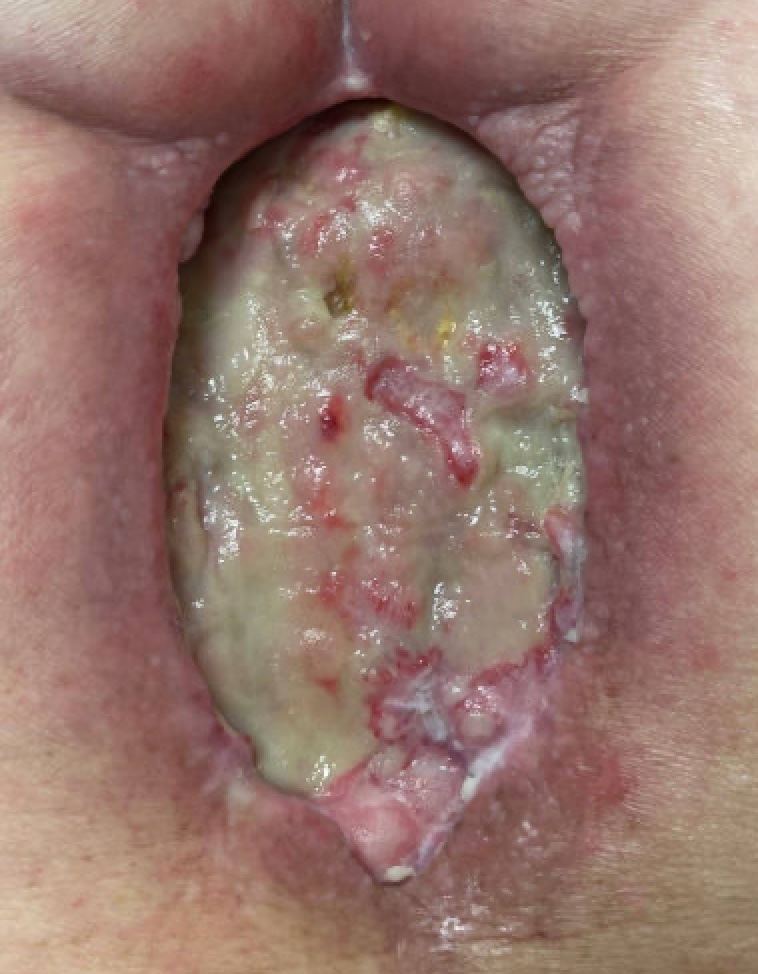
Case Presentation: A 63-year-old female with a history of pelvic rhabdomyosarcoma treated with high dose radiation complicated by radiation induced pancolitis, multifocal enteric strictures, and small bowel obstruction necessitating small bowel resection with end ileostomy in 2021 presented with severe hypomagnesemia (0.5 mmol/L on arrival) and a purulent non-healing sacral wound that had progressed for months despite aggressive outpatient wound care. Her physical exam was also significant for hair loss, palmar and periauricular desquamation, periodontal ecchymoses, perifollicular petechiae, fatigue, and arthralgias which the patient reported had slowly worsened since her abdominal surgery. Given concern for malabsorption, further workup was ordered and significant for a nearly undetectable vitamin C level of 6 umol/L (normal 23-114) as well as deficiencies in Vitamin B6, zinc, calcium, and iron. Over the course of her stay, her infection was treated with antibiotics but her wound persisted. Given concern for clinically significant vitamin C deficiency as a major contributor to her poor wound healing, she was started on 1g IV vitamin C and discharged. After failing a trialed transition to PO vitamin C she was restarted on outpatient infusions and had significant improvement in healing as well as her malaise and arthralgias.
Discussion: Scurvy, a condition resulting from severe vitamin C deficiency, manifests with diverse clinical presentations rooted in impaired collagen synthesis. Patients typically present with fatigue, malaise, myalgias, and characteristic skin changes such as perifollicular petechiae, ecchymoses, and gingival bleeding. Delayed wound healing, anemia, and impaired immunity are also common features. Diagnosis hinges on clinical suspicion bolstered by a history of inadequate dietary intake of vitamin C, malnutrition, or conditions leading to malabsorption. Laboratory findings often reveal low serum vitamin C levels or functional tests showing reduced leukocyte vitamin C concentrations. Treatment involves prompt oral or intravenous administration of vitamin C, with dosages tailored to the severity of symptoms and underlying deficiency. Clinical improvement is typically rapid upon initiation of supplementation, emphasizing the curative potential of timely intervention in reversing the debilitating effects of scurvy. Regular monitoring and dietary counseling are essential for preventing recurrence in vulnerable populations.
Conclusions: This case underscores the critical importance of identifying and correcting nutrient deficiencies, especially vitamin C (scurvy), in managing chronic wounds exacerbated by radiation necrosis and/or malabsorption. Timely intervention with appropriate vitamin supplementation can lead to significant clinical improvement and enhance patient outcomes in complex medical conditions.