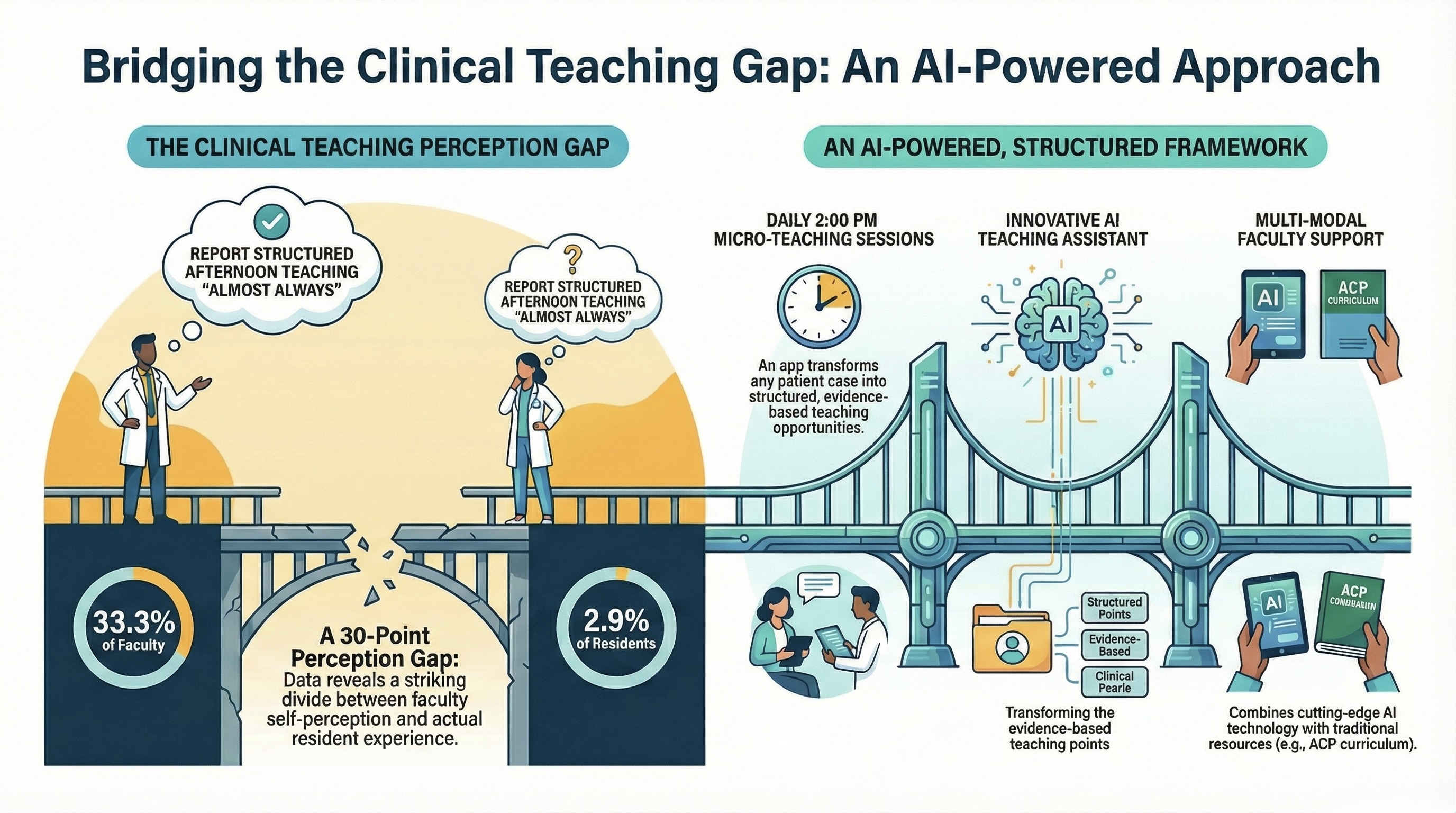
Background: linical teaching during busy inpatient afternoons is often inconsistent, leaving learners with variable educational experiences. Baseline data from our program revealed a large perception gap where a third of faculty believed afternoon teaching almost always occurred, while only a small fraction of clinicians reported the same. This gap highlighted the need for a structured system that supports reliable bedside and micro teaching while addressing barriers such as clinical workload, limited protected time, and variable teaching confidence. Advances in artificial intelligence now offer new opportunities to support faculty with content generation and real time educational guidance.
Purpose: To implement and evaluate a structured afternoon teaching model supported by a novel AI assisted faculty development tool, with the goal of improving teaching frequency, standardization, and clinician satisfaction.
Description: We conducted a multi stakeholder needs assessment to identify barriers to consistent teaching. Findings guided the development of a daily structured teaching session at two in the afternoon that emphasizes short focused micro teaching encounters. Interventions included protected time, clear expectations for faculty participation, and a set of micro teaching templates to support ten to fifteen minute sessions. We also introduced an AI based teaching assistant that transforms simple case inputs into clinically relevant questions, teaching strategies, and updated evidence sources. Faculty received access to traditional resources such as ACP curriculum material along with live demonstrations of our AI tool during training workshops. Teaching fidelity was monitored through quick response code surveys and monthly review of participation data. Early outcomes after six months demonstrated improved consistency, better alignment between faculty intentions and clinician experiences, and growing comfort with the new digital teaching support system.
Conclusions: A structured afternoon teaching model paired with an AI supported faculty development tool improved teaching reliability and narrowed the perception gap between faculty and clinicians. This approach provides a scalable strategy for programs seeking practical solutions to strengthen clinical teaching without requiring extensive additional time or resources. Broader implementation may enhance educational culture and promote sustained improvements in the teaching environment.