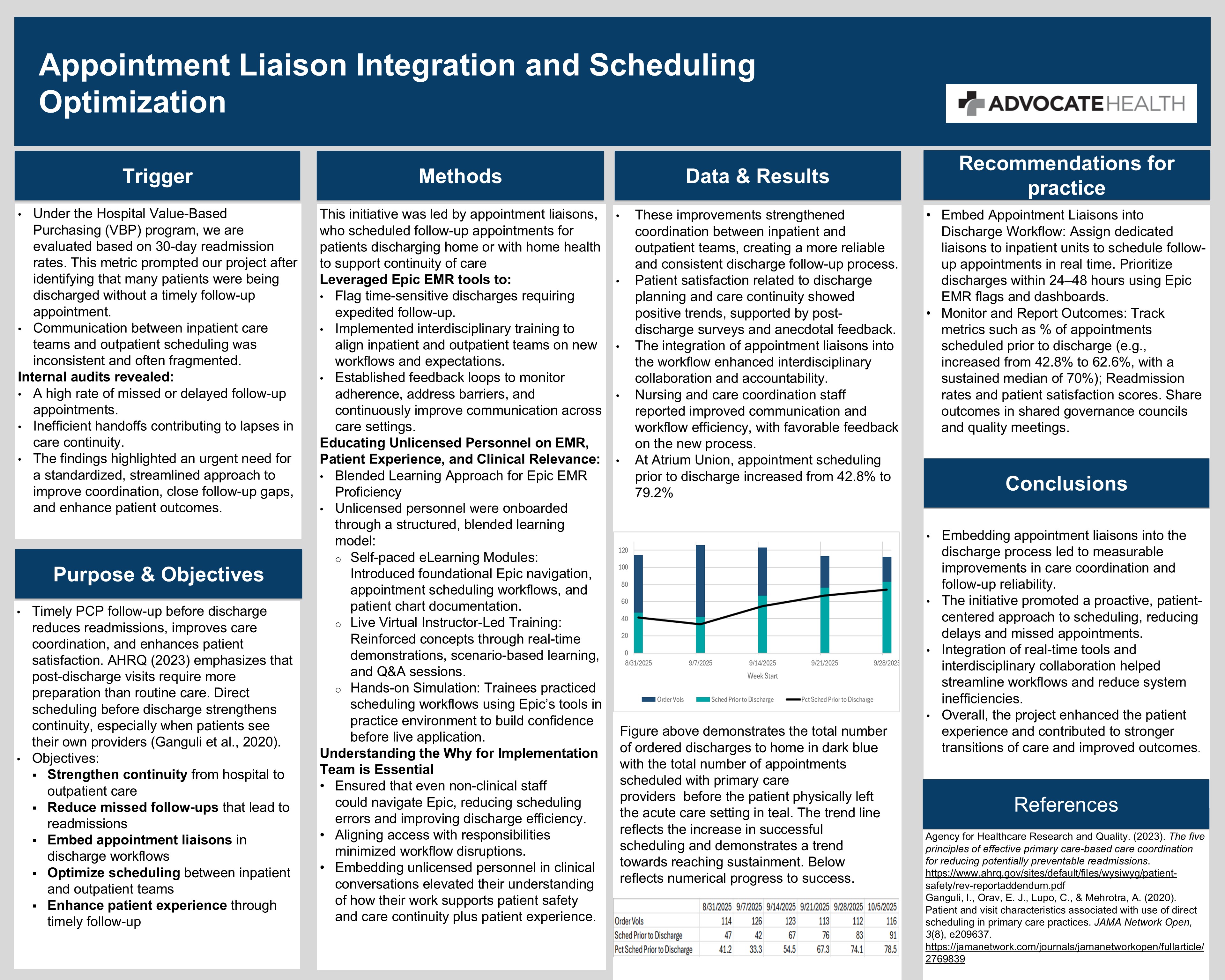
Background: Under the Hospital Value-Based Purchasing (VBP) program, we are evaluated based on 30-day readmission rates. This metric prompted our project after identifying that many patients were being discharged without a timely follow-up appointment.Communication between inpatient care teams and outpatient scheduling was inconsistent and often fragmented.Internal audits revealed:A high rate of missed or delayed follow-up appointments.Inefficient handoffs contributing to lapses in care continuity.The findings highlighted an urgent need for a standardized, streamlined approach to improve coordination, close follow-up gaps, and enhance patient outcomes.
Purpose: Timely PCP follow-up before discharge reduces readmissions, improves care coordination, and enhances patient satisfaction. AHRQ (2023) emphasizes that post-discharge visits require more preparation than routine care. Direct scheduling before discharge strengthens continuity, especially when patients see their own providers (Ganguli et al., 2020).Objectives:Strengthen continuity from hospital to outpatient careReduce missed follow-ups that lead to readmissionsEmbed appointment liaisons in discharge workflowsOptimize scheduling between inpatient and outpatient teamsEnhance patient experience through timely follow-up
Description: This initiative was led by appointment liaisons, who scheduled follow-up appointments for patients discharging home or with home health to support continuity of careLeveraged Epic EMR tools to: Flag time-sensitive discharges requiring expedited follow-up.Implemented interdisciplinary training to align inpatient and outpatient teams on new workflows/expectations.Established feedback loops to monitor adherence, address barriers, and continuously improve communication..Educating Unlicensed Personnel on EMR, Patient Experience, and Clinical Relevance:Blended Learning Approach for Epic EMR ProficiencyUnlicensed personnel were onboarded through a structured, blended learning model:Self-paced Modules: Introduced Epic navigation, appointment scheduling workflows, and chart documentation.Live Virtual Instructor-Led Training: Reinforced concepts through real-time demonstrations, scenario-based learning, and Q&A sessions.Hands-on Simulation: Trainees practiced scheduling workflows using Epic’s tools in practice environment to build confidence before live application.
Conclusions: Embedding appointment liaisons into the discharge process led to measurable improvements in care coordination and follow-up reliability.The initiative promoted a proactive, patient-centered approach to scheduling, reducing delays and missed appointments.Integration of real-time tools and interdisciplinary collaboration helped streamline workflows and reduce system inefficiencies.Results:These improvements strengthened coordination between inpatient and outpatient teams, creating a more reliable and consistent discharge follow-up process.Patient satisfaction related to discharge planning and care continuity showed positive trends, supported by post-discharge surveys and anecdotal feedback.The integration of appointment liaisons into the workflow enhanced interdisciplinary collaboration and accountability.Nursing and care coordination staff reported improved communication and workflow efficiency, with favorable feedback on the new process.At Atrium Union, appointment scheduling prior to discharge increased from 42.8% to 79.2%