Background: Hospital medicine services often face challenges in maintaining continuity of care, interdisciplinary collaboration, and operational efficiency across medical‑surgical units. Traditional rounding models can fragment communication and accountability, limiting opportunities to improve patient outcomes and staff satisfaction.
Purpose: To implement and evaluate a Hybrid Geographic Rounding Model designed to strengthen continuity of care, foster interdisciplinary collaboration, and enhance operational performance within hospital medicine.
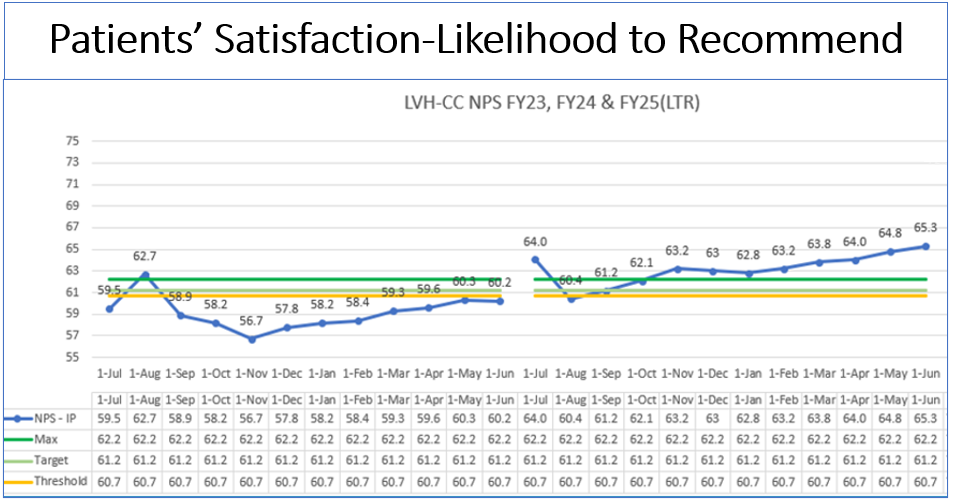
Description: Physician–APC teams were assigned to specific medical‑surgical units on a weekly basis, promoting consistent engagement in multidisciplinary rounds, rapid response coverage, and accountability for unit‑level safety, quality, and patient experience. Flex clinicians supported census balance across units while maintaining communication with care teams and continuity for their patients.Guided by principles of safety, quality, and patient‑centered decision‑making, the model emphasized geographic alignment in census management without delaying bed assignments. Standardized documentation of patient handoffs and adherence to unit‑based workflows were critical to success.Implementation of the Hybrid Geographic Rounding Model led to improved team communication, enhanced patient and staff satisfaction, and a reduction in length‑of‑stay observed‑to‑expected (LOS O:E) ratio to below 1, without increasing readmission rates. Key success factors included multidisciplinary collaboration, effective communication, responsiveness to feedback, and a culture of continuous improvement.
Conclusions: Hybrid Geographic Rounding, when thoughtfully adapted to institutional needs, can significantly enhance inpatient care delivery and operational performance. This model demonstrates that aligning rounding practices geographically fosters continuity, strengthens collaboration, and improves both patient and staff outcomes.
.png)