Background: High-quality patient–provider communication improves comprehension, trust, satisfaction, and outcomes (1,2). Yet the quality of care and patient safety can be compromised by challenges such as frequent handoffs, complex teams, time pressure, and fragmented systems (3). Although many hospitals have implemented communication-related initiatives, best practices for hospital-based implementation remain uncertain. This study aimed to characterize current communication practices and barriers across diverse institutions.
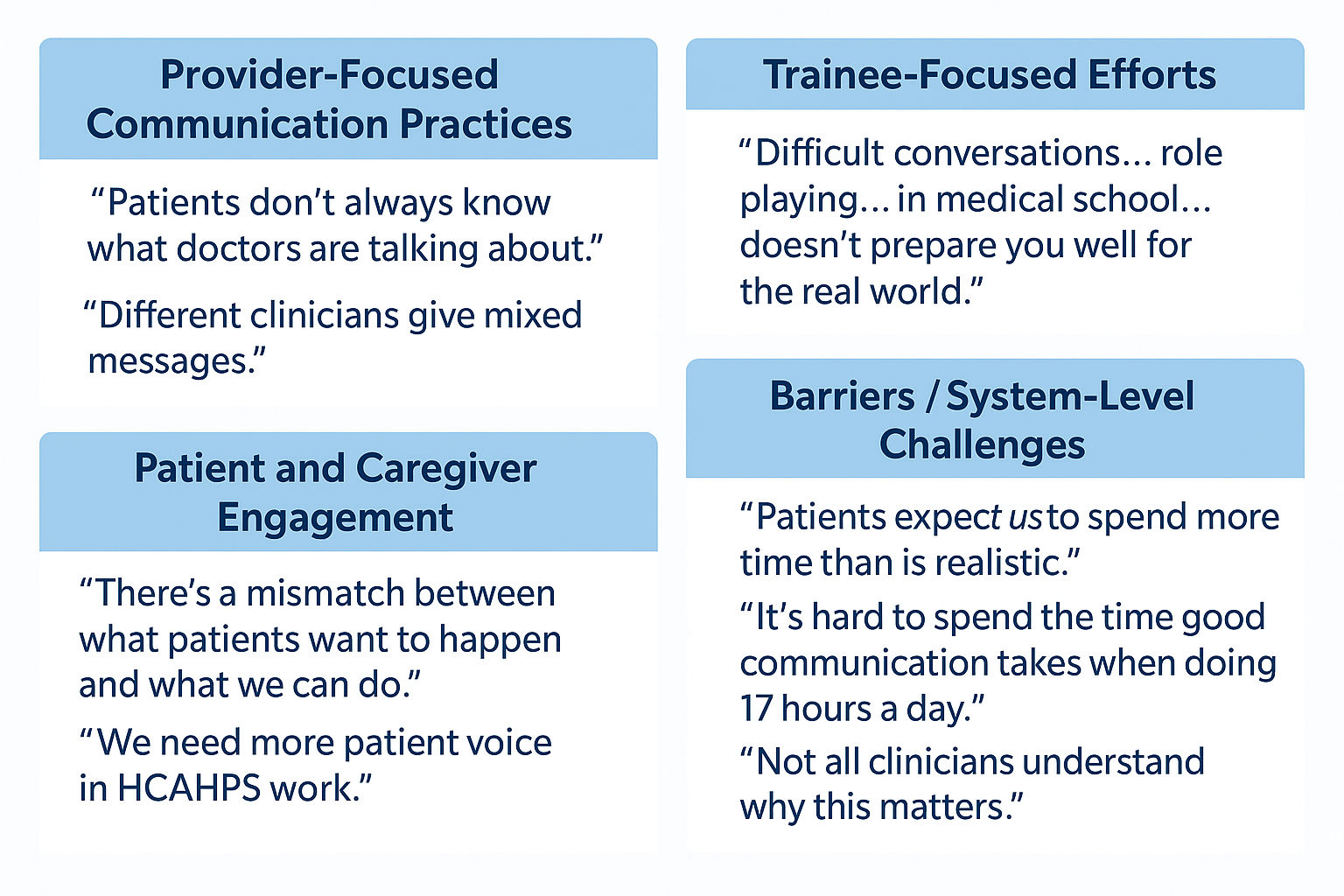
Methods: Structured focus groups were facilitated by trained moderators, with each group including at least one Patient and Family Advisory Council (PFAC) representative, followed by a survey developed by members of the HOMERuN (4) communication and education workgroups. Participants from broad geographic institutions were asked to discuss communication initiatives, trainee education strategies, patient/caregiver engagement mechanisms, and barriers to implementation. Rapid Qualitative Analysis (5) was used to identify themes within four domains: provider-focused initiatives, trainee-focused efforts, patient/caregiver engagement, and system-level barriers.
Results: Provider-focused interventions—such as face cards, bedside rounding, discharge huddles, counseling, and communication frameworks—were abundant but varied in scope and integration, and were often siloed across teams. Many were not evidence-based, not co-designed with patients, and rarely tailored to populations with communication challenges. Participants described a heavy reliance on Hospital Consumer Assessment of Healthcare Providers and Systems (HCAHPS) patient survey scores despite known limitations. Feedback systems for practicing clinicians were minimal, and most interventions targeted individual behavior rather than system based. Trainee-focused efforts (simulation, OSCEs [Objective Structured Clinical Examinations], structured curricula) were present at several institutions but variable, with some reporting little formal communication training. Significant gaps persisted, including limited real-world feedback and a disconnect between preclinical and clinical training. A small number of sites reported innovative models such as embedded psychologists or AI feedback. Patient and caregiver engagement was limited. While many institutions had PFACs, accessibility, integration into hospital medicine, and frontline clinician awareness varied considerably. Most interventions were created for patients rather than with them. Barriers were pervasive: initiative fatigue, competing priorities, sustainability challenges, insufficient measurement tools, generational and cultural communication differences, technology-related siloing, language and health literacy challenges, and fragmented care structures. Many interventions did not address underlying system-level obstacles, creating a mismatch between strategies and clinical realities.
Conclusions: Clinicians demonstrate strong commitment to improving communication, but current efforts are fragmented and insufficiently aligned with patient voices and structural constraints. Sustainable progress will require coordinated, system-level approaches integrating patient co-design, strengthened feedback, alignment with clinical workflow, and broader metrics beyond HCAHPS. Implementation-science-guided strategies may be essential for durable and equitable improvement.