Background: It is reported harmful diagnostic errors (DEs) occurred in 7.2% of hospital care setting. DEs are a significant threat to patient safety, and reduction of DEs is a key to achieve diagnostic excellence. Given their central role in patient care, nurses are considered to play significant roles in preventing DEs. Our previous research revealed 61.2% of nurses had concern on physicians’ diagnoses in a month, suggesting nurses’ witnessing DEs is common. However, limited data exist regarding relations of nurses’ witnessing DEs and their background DE knowledge. This study aimed to assess nurses’ knowledge of DEs and examine its relationship with their witnessing such errors.
Methods: This was a nationwide, cross-sectional, online survey conducted in Japan. All participants were nurses who registered on the largest online portal for medical professionals in the country. The survey instrument included demographic items, test questions from the Diagnostic Knowledge Assessment Tool (D-KAT), which is a validated tool to assess DE knowledge, and questions regarding experiences witnessing DEs. Logistic regression analyses, involving univariate and multivariate analyses, were performed to compare the group that reported witnessing physicians’ DEs (witness group) with the group that reported not witnessing such errors (non-witness group) and to identify factors associated with witnessing DEs.
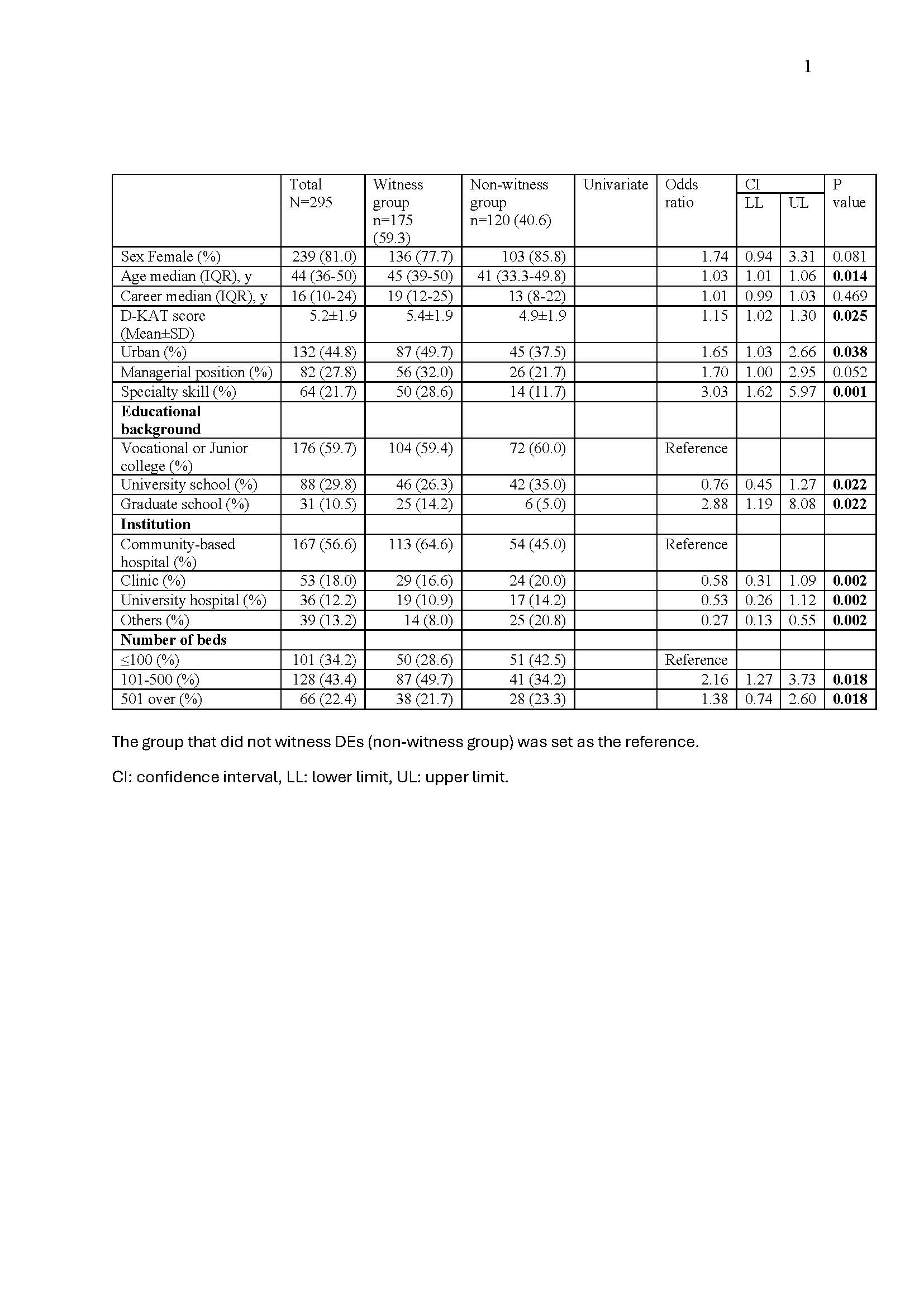
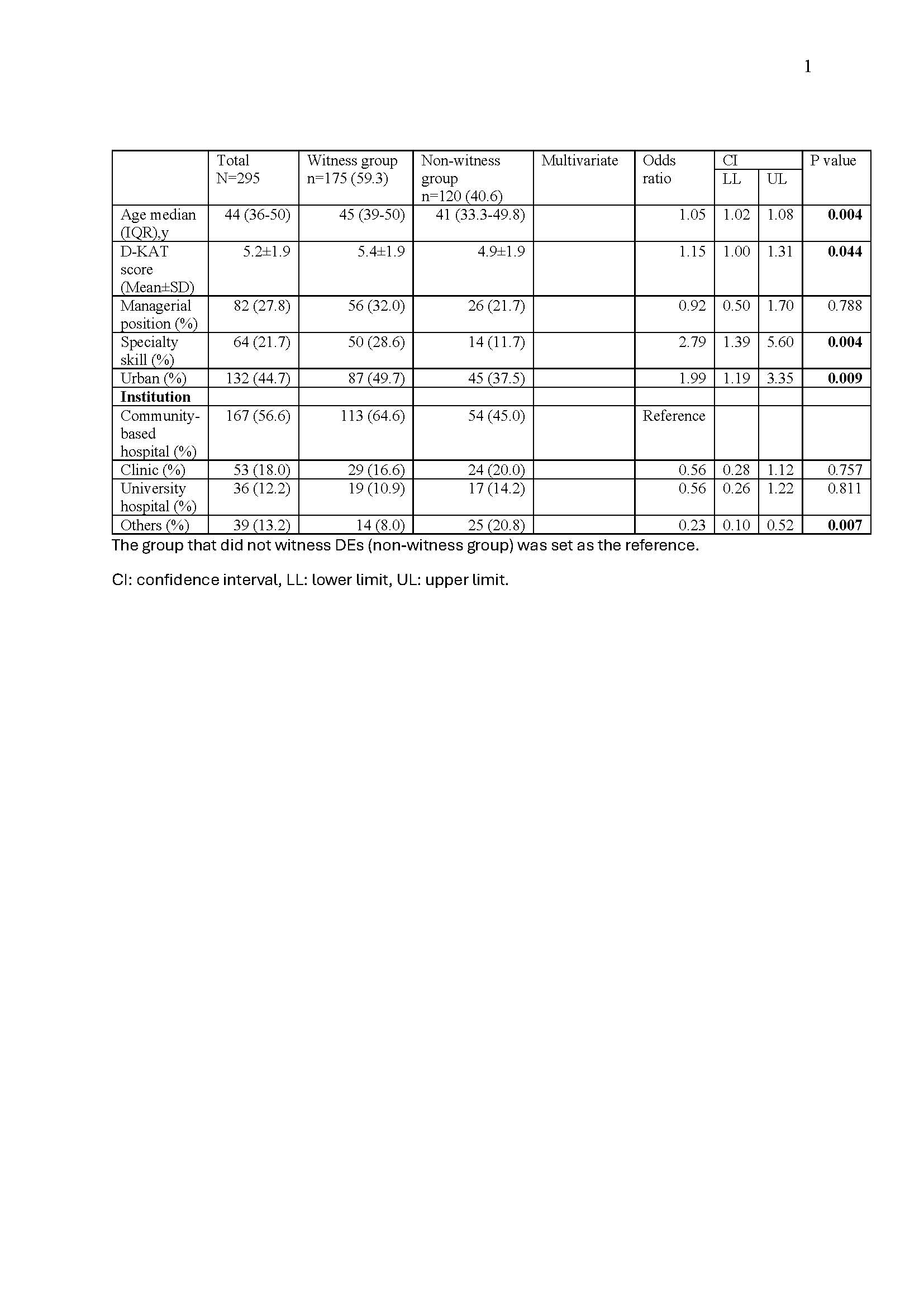
Results: In total, 299 people responded, and 4 were excluded. Of the respondents, 239 (81.0%) were female. The median age and years of experience were 44 years and 16 years, respectively. The mean D-KAT score was 5.2±1.9, and 175 (59.3%) respondents declared having ever witnessed physicians’ DEs in their career. Univariate analysis (Table 1) revealed older age (odds ratio [OR] 1.03; 95% confidence interval [CI] 1.01-1.06; P=0.014), managerial position (OR 1.70; 95% CI 1.00-2.95; P=0.052), and specialty skills (OR 3.03; 95% CI 1.62-5.97; P=0.001) were associated with witnessing DEs. Furthermore, the D-KAT score was significantly higher in the witness group (OR 1.15; 95% CI 1.02-1.30; P=0.025). On multivariate analysis (Table 2), older age (OR 1.05; 95% CI 1.02-1.08; P=0.004) and specialty skills (OR 2.79; 95% CI 1.39-5.60; P=0.004) were associated with witnessing physicians’ DEs. Nurses in the witness group had significantly higher D-KAT scores than those in the non-witness group (OR 1.15; 95% CI 1.00-1.31; P=0.044).
Conclusions: Nurses with knowledge of DEs are more likely to witness such events, underlining the importance of nurses’ DE knowledge and education in preventing DEs.