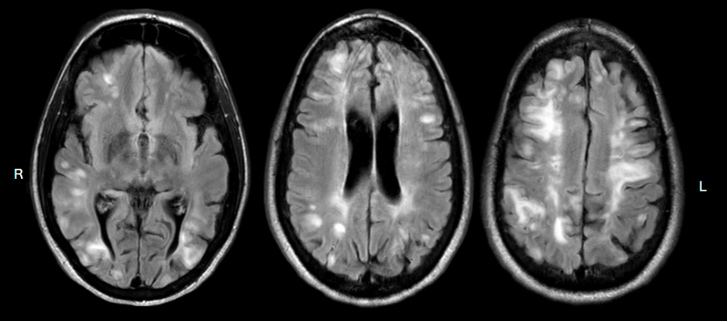
Case Presentation: A 28-year-old male with sickle cell disease (SCD) complicated by prior ischemic stroke, moyamoya, and chronic kidney disease (CKD) presented with diffuse pain. Labs showed elevated lactate dehydrogenase and bilirubin, high reticulocyte count, and anemia consistent with sickling. He was admitted for vaso-occlusive pain crisis. On hospital day 2, he developed fever, dyspnea, hypoxia, and imaging findings consistent with acute chest syndrome which improved with IV antibiotics and a blood transfusion. He remained admitted for ongoing pain management and was noted to have persistent hypertension refractory to his home antihypertensives. This was attributed to pain. On hospital day 9, he was found acutely altered and had a witnessed seizure. CT head showed multifocal cortical hypodensities in all lobes concerning for infarcts. Two days later, he had a second seizure and developed severe headache. MRI brain revealed extensive bilateral subcortical signal abnormality with leptomeningeal enhancement consistent with posterior reversible encephalopathy syndrome (PRES). A nicardipine drip was started with normalization of blood pressure and resolution of headache. His pain improved and he was discharged home in stable condition.
Discussion: PRES, a rare but likely under-reported complication of sickle cell crisis, is a syndrome characterized by vasogenic cerebral edema in the setting of acute hypertension. Symptoms include headaches, vision changes, encephalopathy, and seizures. The presumed mechanism for the association between SCD and PRES is a combination of endothelial dysfunction and ischemia due to microvascular occlusions during sickling, and acute on chronic hypertension due to underlying CKD. The risk of developing PRES increases further in acute chest syndrome due to disruptions in the blood brain barrier caused by hypoxemia and systemic inflammation. Vaso-occlusive crisis may be treated with IV fluids or exchange transfusion in severe cases (acute hypoxemia or ischemic stroke), which can precipitate fluid shifts and further impact blood pressure. This complex milieu increases susceptibility to the vasogenic cerebral edema that defines PRES. Our patient’s course was also complicated by his known history of moyamoya, a progressive large vessel vasculopathy characterized by narrowing of intracranial blood vessels leading to development of excessive collateral vessels. SCD is a major risk factor for moyamoya, as endothelial injury from recurrent vaso-occlusive crises results in intimal hyperplasia and large vessel arteriopathy. Concurrent SCD and moyamoya markedly increases risk for morbidity from adverse neurological events compared with SCD alone. Moyamoya may also increase risk for PRES, as it is associated with impaired cerebral autoregulation and blood pressure fluctuations.
Conclusions: The purpose of this case is to highlight a serious neurologic complication of vaso-occlusive crisis and emphasize the importance of including PRES on the differential for altered mental status in patients with SCD. Our patient had additional risk factors for PRES including underlying moyamoya. While hypertension may be a manifestation of pain and/or pre-existing CKD in patients with sickle cell crisis, it is important that physicians consider elevated blood pressure as an independent risk factor for adverse neurologic complications. Intentionally treating hypertension alongside pain in vaso-occlusive crisis may decrease comorbidity and improve long-term outcomes.