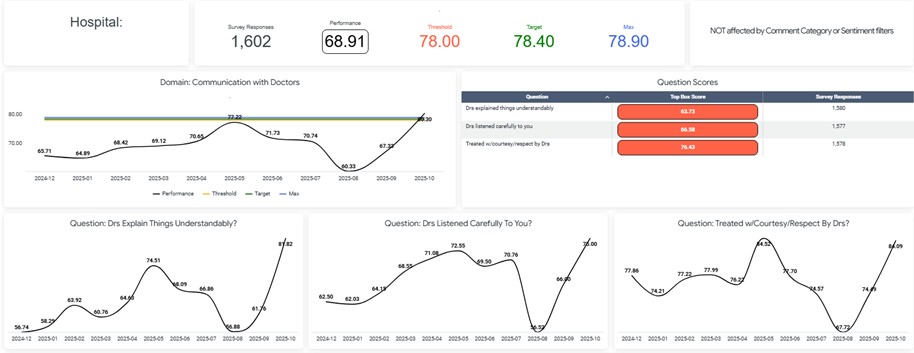
Background: Safe transitions of care and effective communication remain persistent challenges in acute care settings, often impacting patient outcomes and satisfaction. Traditional rounding models lack structured interdisciplinary engagement, leaving gaps in patient understanding, discharge planning, and medication reconciliation. These gaps contribute to increased risk for readmissions and lowered HCAHPS scores.
Purpose: BOOST Rounds were developed as an innovative, patient-centered approach to transform communication and care coordination on medical-surgical units. The initiative aims to improve physician-patient and nurse-patient communication, proactively address social determinants of health (SDOH), and enhance patient experience through structured, team-based rounds.
Description: BOOST Rounds identify patients on hospital day one and peri-discharge, with daily rounds at 2 PM involving physicians, nurses, advanced practice providers, nurse leaders, pharmacists, and family members when possible. Interventions include reviewing diagnoses, consultant input, SDOH, and medication reconciliation, with follow-up at discharge and post-discharge via HMH 24/7 BOOST Rounds. This model introduces a standardized communication script, family engagement strategies, and pharmacist verification of medication reconciliation to ensure safety and clarity. Current process measures include HCAHPS scores for physician and nurse communication, care coordination, medication education, and post-discharge planning. Barriers identified include time constraints, patient engagement challenges, survey fatigue, and maintaining accurate expected discharge dates. Next steps include expanding to additional units, leadership collaboration, and physician education to encourage survey engagement.
Conclusions: BOOST Rounds represent a scalable innovation that redefines interdisciplinary collaboration and patient engagement. By embedding structured communication and proactive discharge planning into daily workflows, this initiative addresses critical gaps in care transitions, improves patient experience, and aligns with organizational goals for quality and safety. Continued implementation and measurement will support sustainability and position BOOST Rounds as the best practice model for hospitals seeking to elevate patient-centered care.