Background: Chronic Obstructive Pulmonary Disease (COPD) is a major contributor to morbidity, mortality, and healthcare costs globally. Acute exacerbations frequently result in hospital admissions, and 30-day readmission rates remain persistently high. Digital health interventions, including mobile apps and remote monitoring, show potential to improve quality of life and reduce exacerbations, though findings are heterogeneous and more studies are needed.
Purpose: From April 2023 to September 2024, one large academic medical center piloted the use of Epic’s MyChart Care Companion for inpatients with COPD to identify and escalate COPD exacerbations early, promote guideline-based outpatient COPD care, and reduce hospital COPD readmissions.
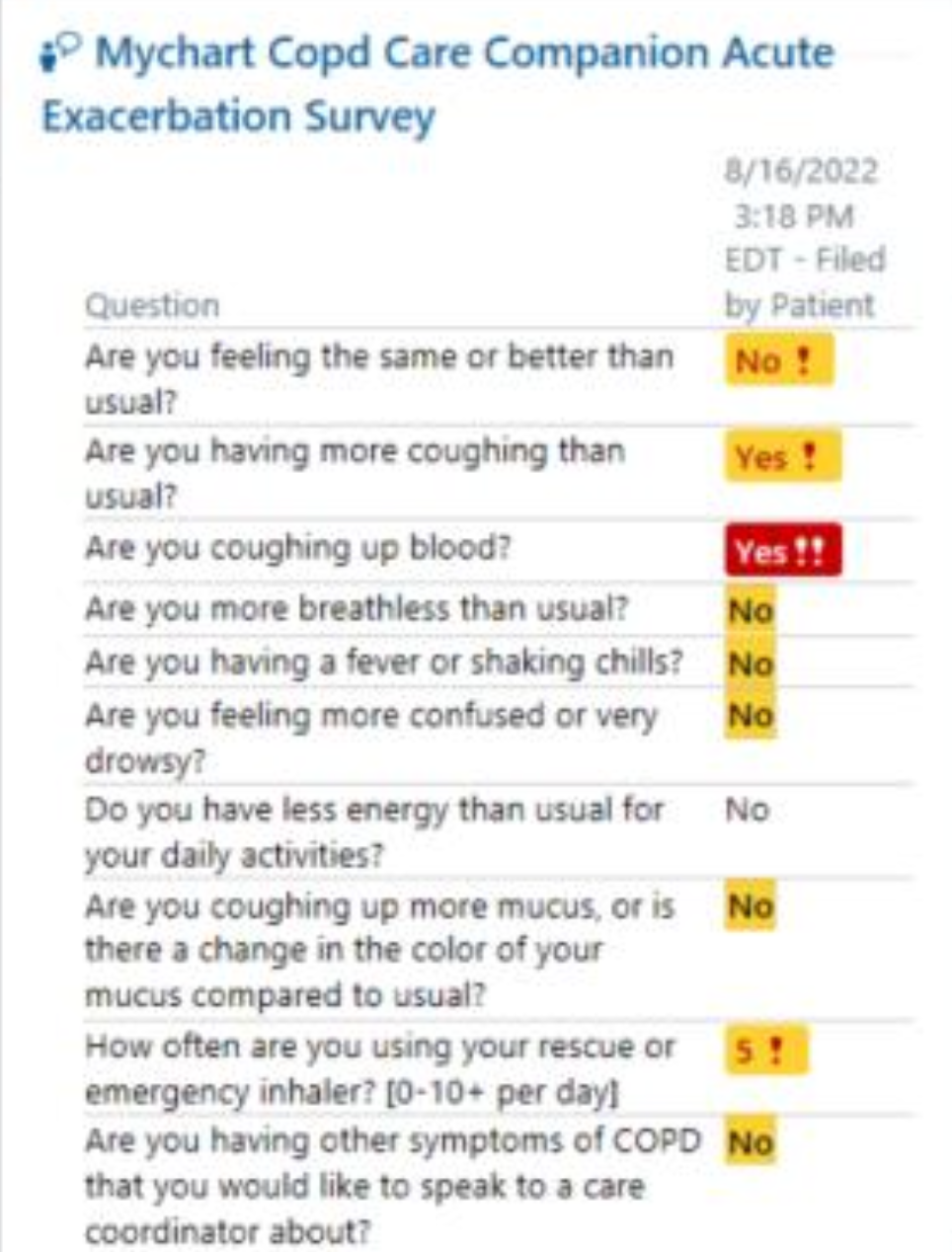
Description: Eligible participants were hospitalized COPD patients identified through a “transitions of care order” built into the COPD admission order set. Enrollment was supported by social workers who also assisted with MyChart activation. Stakeholders included providers, care managers, social workers, and IT support. To ensure sustainability, the program embedded Care Companion into existing discharge workflows, developed escalation algorithms for symptom alerts, and built automated reports to track outcomes. The program delivered questionnaires and educational tasks via smartphone to monitor symptoms, promote smoking cessation and vaccination, and reinforce guideline-based care. Responses triggered automated alerts triaged by urgency and were monitored by the Care Transitions Team. Patients remained enrolled for 3 months post-discharge, and both quantitative (readmissions, medication fills, follow-up visit timeliness) and qualitative (case management case reports, barriers to enrollment) data were collected to inform program refinement and scalability.
Conclusions: Preliminary data including case reports demonstrated improvements in disease understanding, inhaler use, and proactive self-management. Patients reported decreased anxiety, improved confidence in health decisions, and valued timely support from the Care Transitions Team. Several patients described “life before and after” enrollment, noting enhanced quality of life, reduced fear of exacerbations, and greater engagement in pulmonary rehabilitation and community programs. Several patients requested program extension. Engagement with surveys varied, but reinforcement improved adherence.