Background: Unnecessary routine lab testing is a persistent challenge in U.S. hospitals, driving costs, patient discomfort, and iatrogenic anemia. At Emory Saint Joseph’s Hospital (ESJH), chart reviews revealed that 30–40% of daily blood draws were unnecessary based on patient stability criteria.
Purpose: To reduce unnecessary routine blood draws through transparent data sharing, education, and provider-specific feedback.
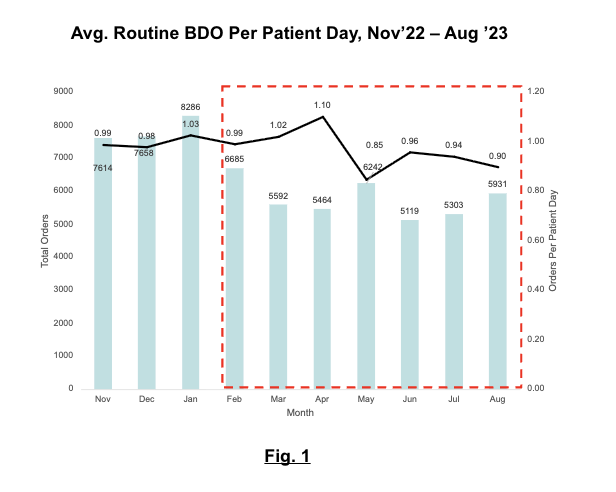
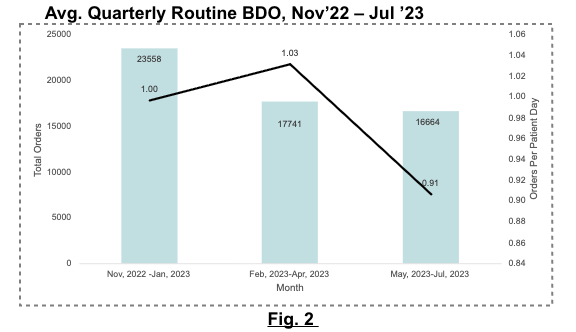
Description: Methods : Baseline data (Nov 2022–Jan 2023) were collected from the Emory Epic Cogito database for all inpatients under hospital medicine with length of stay ≥ 3 days and ≤ 34 days. Routine blood draw orders (BDO) per patient-day and per hospitalist work-hour were tracked. Interventions (starting Feb 2023) included: educational sessions on Choosing Wisely guidelines and cost transparency, dashboards displaying group and individual ordering trends, monthly feedback via email and meetings, and one-on-one feedback for high-order outliers. Results : Routine BDOs per patient-day decreased 4% overall (1.00 → 0.96) over seven months and 9% quarterly (0.91 by May–July). BDOs per hospitalist work-hour declined 27% (1.63 → 1.19). When identified provider data were introduced, rates fell 15% in one month (1.10 → 0.85). No change occurred in stat testing frequency.
Conclusions: Peer comparison and transparent feedback led to measurable, sustained reductions in unnecessary testing without the need for policy mandates. Continued improvement will depend on EMR-based decision support, including duplicate-order alerts and hard stops for standing lab orders beyond three days. The initiative will next expand to additional resident-driven specialties to promote sustained high-value care across the institution.