Background: Unnecessary lab testing in hospital medicine contributes to avoidable costs, patient harm, and downstream diagnostic cascades. Quality improvement (QI) interventions have targeted reductions in lab utilization with varied success and sustainability. Interventions are frequently grouped into education, EMR changes, cost display, audit/feedback, and policy changes with multipronged interventions showing the best outcomes. Our institution has implemented multiple iterations of EMR, policy, and educational interventions with only modest success. To build on these efforts, we developed an automated peer audit and feedback system that provides hospitalists with personalized monthly email reports comparing their lab ordering rates to peers.
Purpose: The goal of this project was to evaluate whether individualized monthly email reports could enhance provider awareness of their laboratory ordering patterns and reduce both overall and low-value lab utilization without adversely affecting patient outcomes. Our SMART AIM was to reduce total lab utilization by 5% over the period of the intervention. Balancing measures included length of stay and 7 day re-admission rates. We evaluated end user impact through qualitative surveys.
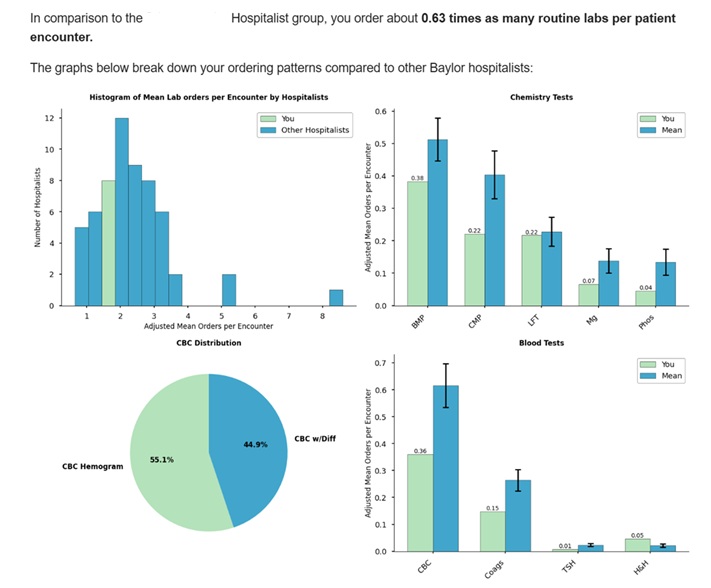
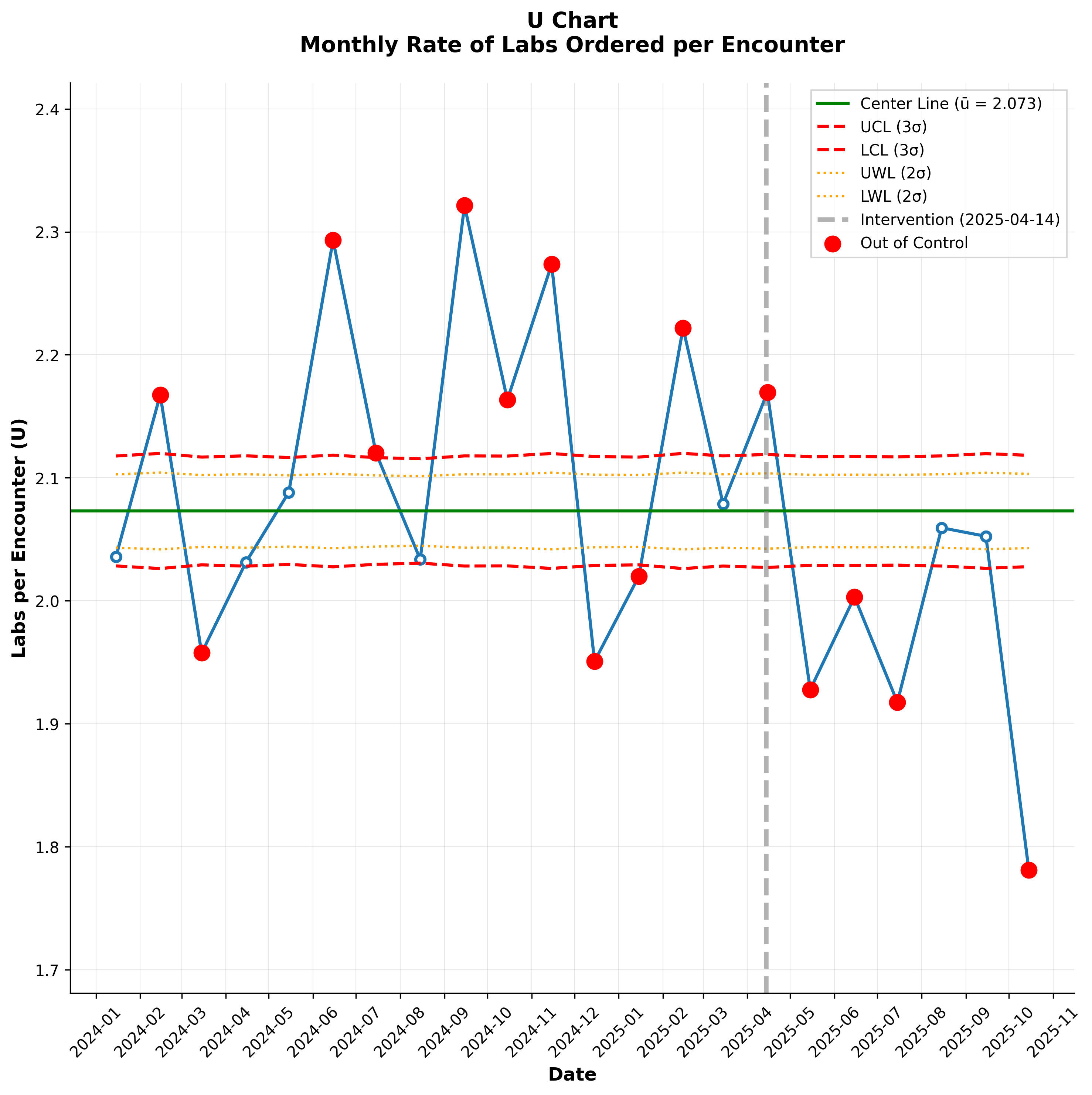
Description: The intervention launched in April 2025 and will continue through May 2026. Baseline lab-ordering and encounter data from the 12 months prior to implementation were obtained. Each month, hospitalists received automated emails summarizing their total labs ordered, ordering frequency for common tests, and comparisons to peer averages (Figure 1). Provider-specific ratios of labs per encounter were calculated and adjusted for differences between admission and evaluation/management encounters. A U-chart was constructed to assess changes in mean labs per encounter.
Conclusions: Since the start of the intervention, mean weekly labs ordered per encounter have demonstrated a special cause variation. Ordering of CBC hemograms has increased, while ordering of the more costly CBC with differential has decreased. No significant changes have been noted in balancing measures. These preliminary findings suggest that a low-burden, automated audit-and-feedback email system may effectively promote more judicious and cost-conscious laboratory ordering among hospitalists.