Background: Hospitalists are experts in inpatient medicine, managing patients with high acuity, severe illnesses, and coordinating care between multiple providers. Given these challenges, it is imperative that they are equipped with the skills to be able to successfully navigate serious illness conversations (SICs). SICs are wide-ranging and include discussions of goals of care, chronic illnesses leading to multiple readmissions, and any situation where providers feel there will be an increased investment from the patient or family. Despite the importance of this skillset, there is no standard communication training that physicians receive, with hospitalists variably learning these skills during training or own experiences. Researchers have found that after completing communication training such as the national VitalTalk Mastering Tough Conversations course, providers’ ability and likelihood to have serious illness conversations with patients increased. 1,2 Additionally, communication training improves goal-concordant care, 2,3 patient quality of life, 4,5 and patient outcomes. 4,5 While much of the current literature focuses on palliative care providers and oncologists conducting these conversations, there is growing recognition of the importance of other providers conducting these conversations with patients. 6,7
Purpose: To evaluate the impact of a Serious Illness Conversation Program tailored for hospitalists on the use of mnemonics and self-perceptions of communication.
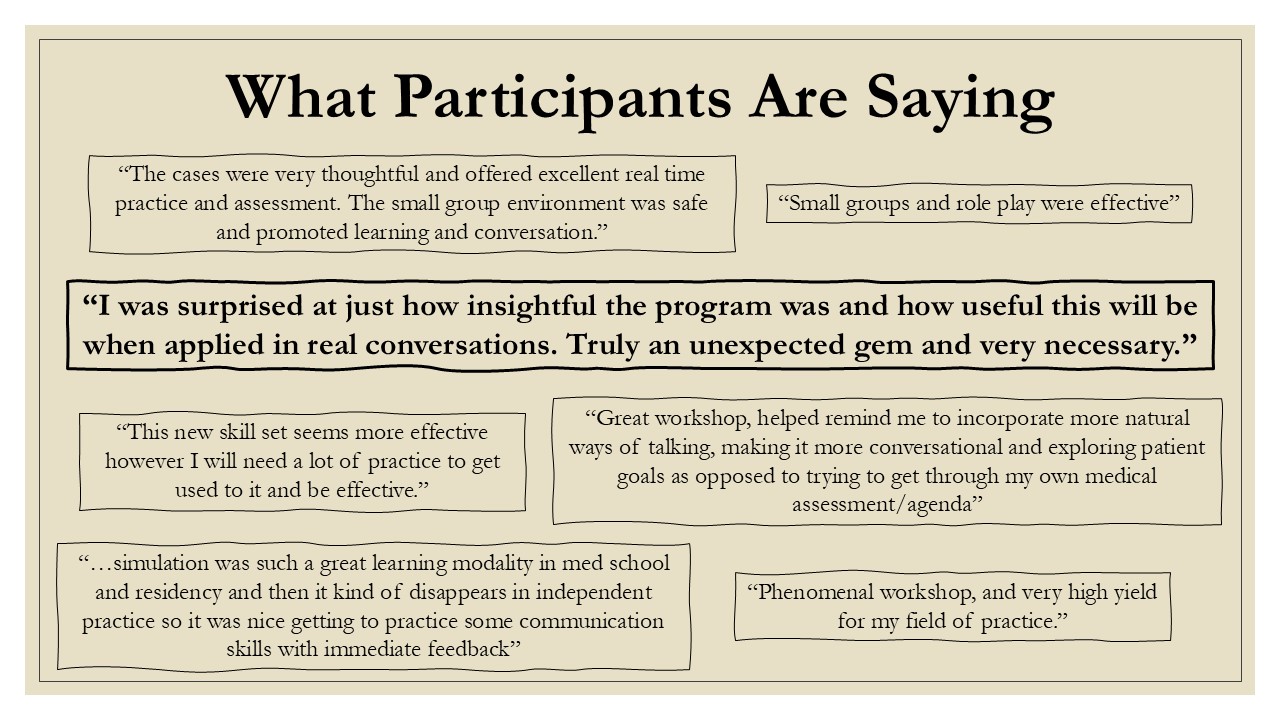
Description: Our institution’s Division of Hospital Medicine collaborated with the Serious Illness Conversation Program (SICP) to tailor their interactive communication workshop based on the national VitalTalk Mastering Tough Conversations curriculum to hospitalists. The 8-hour workshop was designed using adult-learning theory, emphasizing skill development and role-play with simulated patients, prioritizing learner-center approaches and peer learning. The workshop was facilitated by VitalTalk trained, Palliative Medicine providers. Didactics introduced theory and methodology of communication strategies using roadmaps and mnemonics, followed by facilitator demonstrations of the skills. Learners then shifted to active use of the new skills via drills practice with other learners and unscripted role-play with simulated patients. To assess the efficacy of the intervention on planned mnemonic use and communication skill perception, pre-post surveys were conducted. Of the 72 hospitalists who completed the workshop, 70 (97.2%) completed the pre- and post-evaluation. Over half of participants were female (52.9%) with a median of 8 years practicing as an attending. After participation, significant increases (p< 0.0001) were seen across all communication self-perceptions, with all participants reporting either agree or strongly agree on their ability to elicit a patient’s perspective, give serious news to a patient, and build a patient’s understanding about their prognosis (Table 1). At baseline, 68.8% (n=48) individuals reported not using a framework for SICs. After participation, all 48 reported planning to use a framework. Lastly, program feedback has been positive (Image 1).
Conclusions: The goal of this tailored workshop was to enhance the skills of hospitalists in navigating SICs. Overall, this workshop showed significant increases in communication skills and planned use of frameworks when having SICs. Future steps include measuring the longitudinal impact on patients and clinicians.
.jpg)