Background: While pericarditis is a well-recognized inflammatory condition of the pericardium, its association with atrial fibrillation (AF) remains underexplored. Only a limited number of clinical studies have investigated the prevalence and outcomes of AF in the context of acute pericarditis. This study aims to evaluate the prevalence of AF and its impact on in-hospital outcomes among patients hospitalized with pericarditis.
Methods: We conducted a retrospective cross-sectional analysis using data from the United States National Inpatient Sample (NIS) database spanning 2016 to 2020. Patients admitted with a primary diagnosis of acute pericarditis were identified using ICD-10 codes. We assessed the prevalence of AF and compared in-hospital outcomes, including mortality and cardiovascular complications, between patients with and without AF. Multivariate logistic regression was used to adjust for potential confounders such as age, sex, race, and comorbidities.
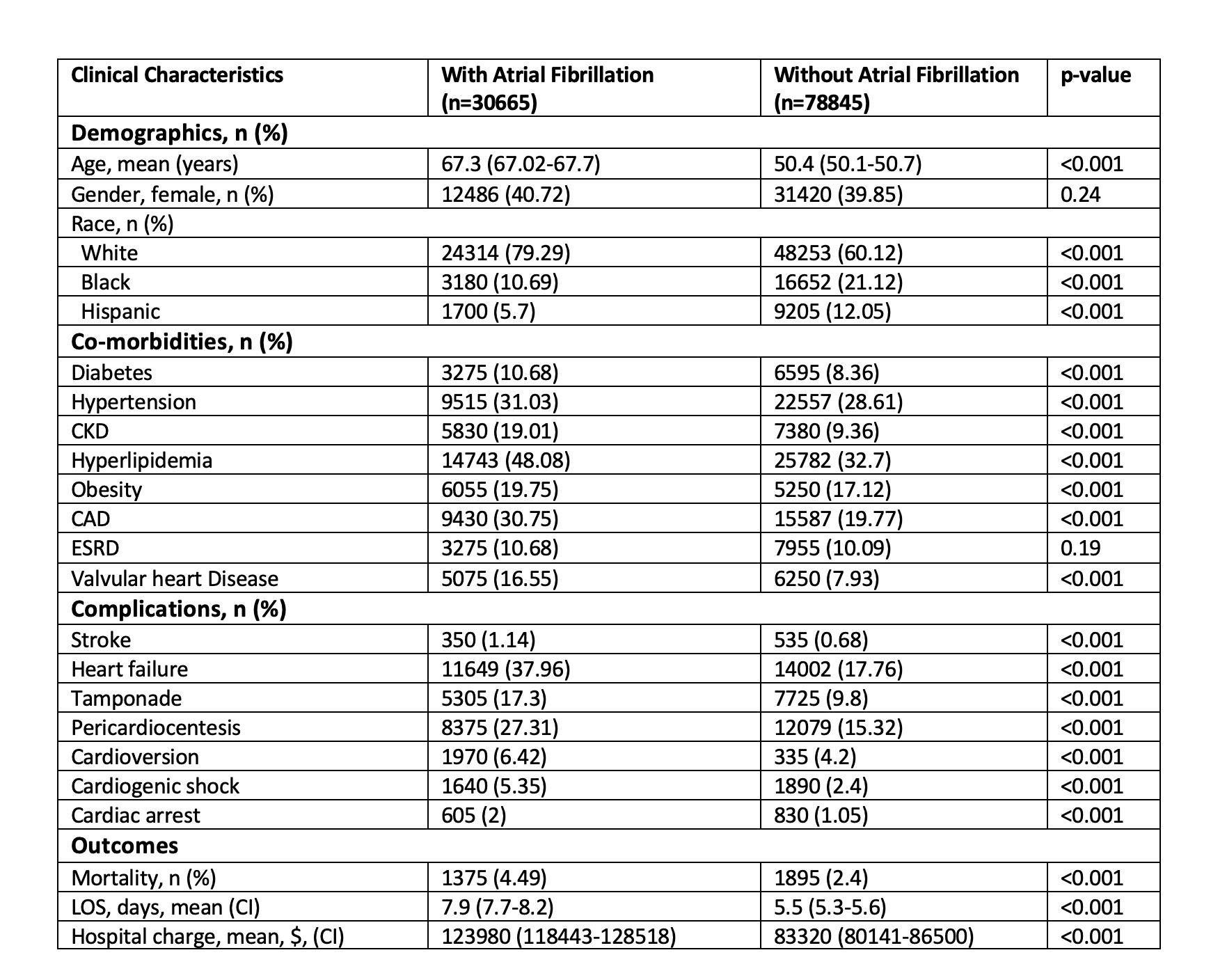
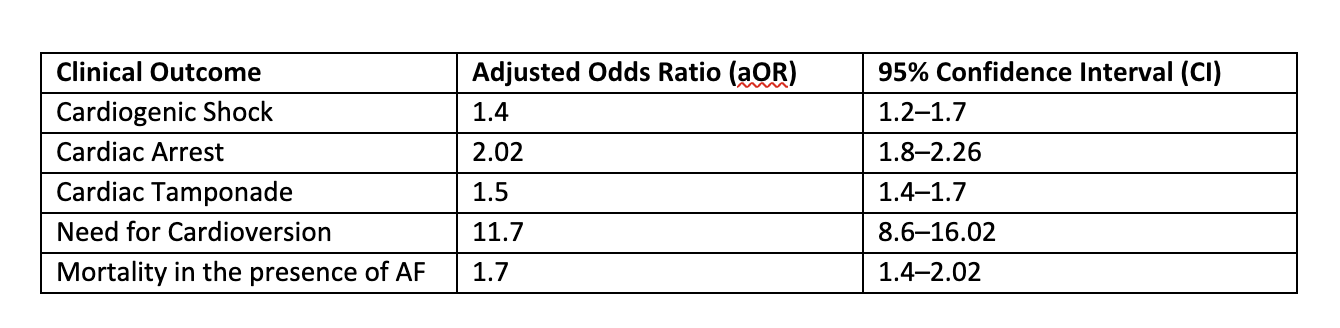
Results: A total of 109,510 hospitalizations for acute pericarditis were identified during the study period. Among these, 30,665 patients (28%) had AF. After adjusting for demographic and clinical variables, AF was found to be independently associated with adverse outcomes, including cardiogenic shock (aOR 1.4, CI 1.2–1.7), cardiac arrest (aOR 2.02, CI 1.8–2.26), cardiac tamponade (aOR 1.5, CI 1.4–1.7), and the need for cardioversion (aOR 11.7, CI 8.6–16.02). Additionally, the presence of AF was associated with increased in-hospital mortality (aOR 1.7, CI 1.4–2.02).
Conclusions: AF is prevalent among patients hospitalized with acute pericarditis and is associated with a significantly elevated risk of critical cardiovascular complications and in-hospital mortality. These findings highlight the importance of early recognition and vigilant monitoring for AF in patients with pericarditis.