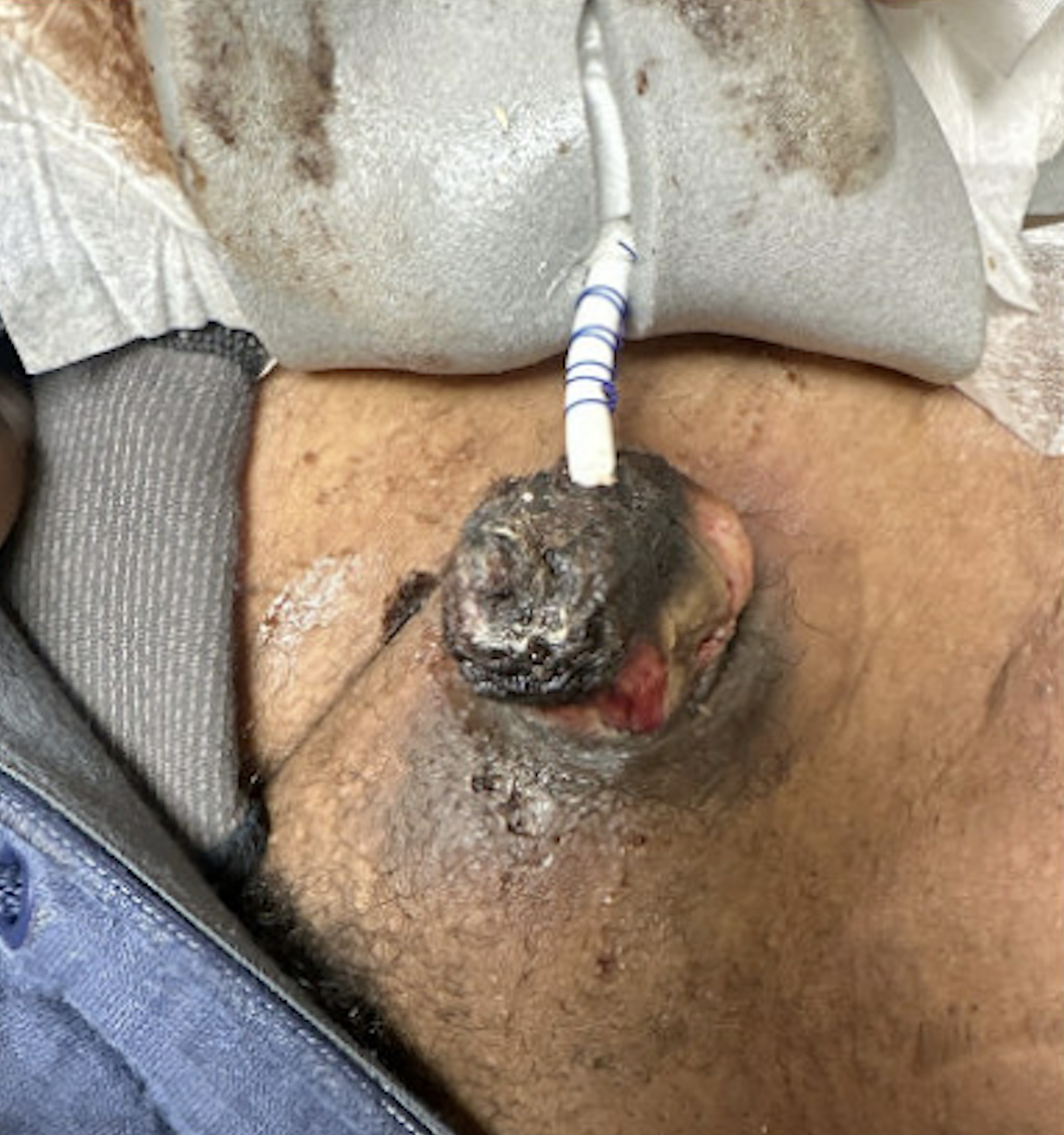
Case Presentation: We present the case of a 46-year-old man with a history of HIV disease, recurrent lymphoma, end-stage renal disease on hemodialysis, and suprapubic catheter (SPC) placement two years prior for urethral strictures. He initially presented to outpatient urology after noticing a rapidly enlarging tissue mass around the SPC site. Biopsy revealed well to moderately differentiated squamous cell carcinoma (SCC) extending through the abdominal wall into the bladder lumen. The catheter was repositioned with plans for oncologic follow-up; however, he presented to the emergency department with profuse bleeding from the tumor site a few weeks later. During hospitalization, the mass became fluctuant and malodorous, and imaging revealed an abscess within the tumor near the anterior abdominal wall. Interventional radiology–guided drainage was performed, but his course was complicated by recurrent infections with ESBL Escherichia coli, vancomycin-resistant Enterococcus faecium, and Candida albicans, necessitating broad-spectrum antimicrobial and antifungal therapy. Following stabilization, multimodal oncologic therapy with radiation and renally adjusted Cisplatin was initiated, with plans for potential surgical resection pending treatment response.
Discussion: SCC arising from a chronic SPC tract is an exceptionally rare complication, with only a handful of cases reported in the literature. The proposed pathogenesis involves chronic local irritation, recurrent infection, and inflammation resulting in squamous metaplasia and malignant transformation. Although most reported cases occur after a decade of catheterization, this case demonstrates that malignant transformation may occur after a comparatively short duration, particularly in immunocompromised patients. The presentation may mimic infection or granulation tissue, underscoring the need for biopsy of any new or atypical growth around SPC tracts. Given the absence of standard management, treatment approaches have ranged from local excision and radical cystectomy to palliative radiotherapy or multimodal therapy, with generally poor outcomes. This emphasizes the need for clear guidelines defining optimal management of this clinical presentation.
Conclusions: This case emphasizes the aggressive nature of SCC arising from SPC tracts and highlights the potential for earlier than expected malignant transformation in high-risk, immunocompromised individuals. Clinicians should maintain a high index of suspicion for neoplastic change in patients with chronic SPCs and, more broadly, indwelling medical devices as a whole. Increased surveillance and multidisciplinary management are critical to improving outcomes in this rare but serious complication of long-term catheterization.
.jpg)