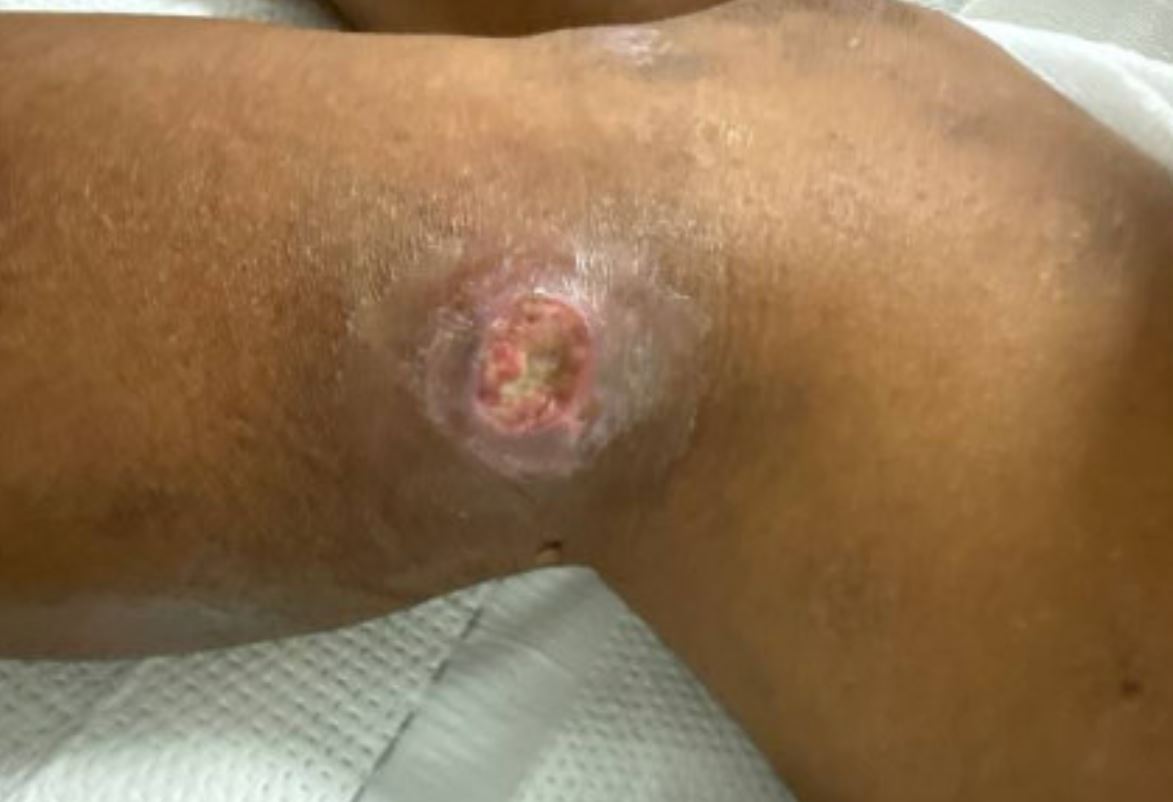
Case Presentation: A 37-year-old woman with chronic HCV infection and opioid use disorder presented to the hospital with multiple painful wounds that developed on her bilateral arms and legs and had progressively worsened over the preceding 2 weeks. She reported foul-smelling discharge from the wounds, as well as subjective fevers and chills. She reported recent IV drug use prior to admission, including fentanyl that she acquired illicitly, but denied any injection at the sites of her wounds. She denied any needle sharing, but did report reusing dirty needles, and did not frequently use needle exchange services. Her physical exam was significant for normal vitals. She was afebrile, with regular heart sounds with no murmurs or gallops, as well as multiple well-circumscribed, ulcerating lesions to her bilateral forearms associated with purulent drainage (See Figures 1 and 2). Laboratory studies were significant for normal white-blood cell count (8.6 thousand-cells/µL) as well as elevated CRP to 29.40mg/L. She was ultimately diagnosed with xylazine-induced skin ulceration complicated by overlying purulent cellulitis. Her ulcers were treated with aggressive wound care therapy and IV antibiotics for overlying cellulitis. She was also initiated on buprenorphine therapy for opioid use disorder and eventually discharged to an inpatient substance use rehab facility. At follow up visits, she reported gradual improvement in her wounds after cessation of fentanyl use.
Discussion: Xylazine is an alpha-2 adrenergic receptor agonist that is used by veterinarians for sedation and analgesia in animals and is not approved by the United States Food and Drug Administration for use in humans (1). In the United States, xylazine is also an increasingly common adulterant found in illicit fentanyl (1). Several case reports have associated necrotic skin ulcerations to xylazine among patients who intravenously inject illicit fentanyl adulterated with xylazine, both at sites of injection and, interestingly, areas distant from injection sites, which suggests a unique pathophysiology behind these wounds (2,3). Proposed pathophysiologic mechanisms include direct cytotoxic effects of xylazine, as well as local tissue hypoxia and vasoconstriction resulting from alpha-2 adrenergic effects (1). These necrotic wounds can then develop secondary skin and soft tissue infections such as cellulitis, abscesses, osteomyelitis, or pyomyositis (1,4). Clinical microbiologic data from one hospital system in the Mid-Atlantic demonstrated wound cultures from over half of patients are positive, with the vast majority of those growing Gram-positive bacteria, mostly MRSA and beta-hemolytic streptococci (4). Treatment of xylazine-induced wounds remains poorly studied, though most case reports support debridement and aggressive wound care (5). Treatment strategies also rely on harm reduction strategies, frequent co-testing for bloodborne pathogens like HIV and HCV, and linkage to comprehensive, multidisciplinary opioid use disorder treatment (4).
Conclusions: Xylazine, an increasingly common adulterant found in illicit fentanyl, can cause severe, ulcerative lesions among people who inject drugs. These wounds can be highly morbid and can develop secondary skin and soft tissue infections, such as cellulitis or pyomyositis. Hospitalists should be aware of how to diagnose and treat xylazine-induced skin wounds, which are an increasingly recognized and morbid complication of opioid use disorder among those who inject illicit fentanyl.
.jpg)