Background: Ethical decision-making is fundamental to patient care in hospital medicine. Prior scholarly efforts to define what is special about ethics in hospital medicine have been limited. As previous studies have shown, much of the ethical decisions that come up on hospitalist teams are handled informally, either at the bedside by the treating hospitalist or in quotidian discussions with members of the medical team. One study found that of 270 patients seem on an academic hospitalist service over 6 months, 77 had identified ethical dilemmas, but only 5 of these resulted in a formal ethics consult. Though formal ethics consults represent a small fraction of the ethics questions faced by hospitalists, they highlight the issues that may be most challenging for hospitalists to assess and manage.
Methods: The database of a large academic medical center’s ethics consult service was reviewed for consultation records regarding patients on a hospital medicine service. All patients were de-identified and only consult questions and summative data on the consult were viewed by the researcher. For each consult, the ethics consultant(s) involved in the case identified the 3 most salient themes informing their recommendations. These themes were chosen from a shared, pre-determined list developed iteratively over the course of prior practice. These themes were collected and analyzed for frequency of occurrence.
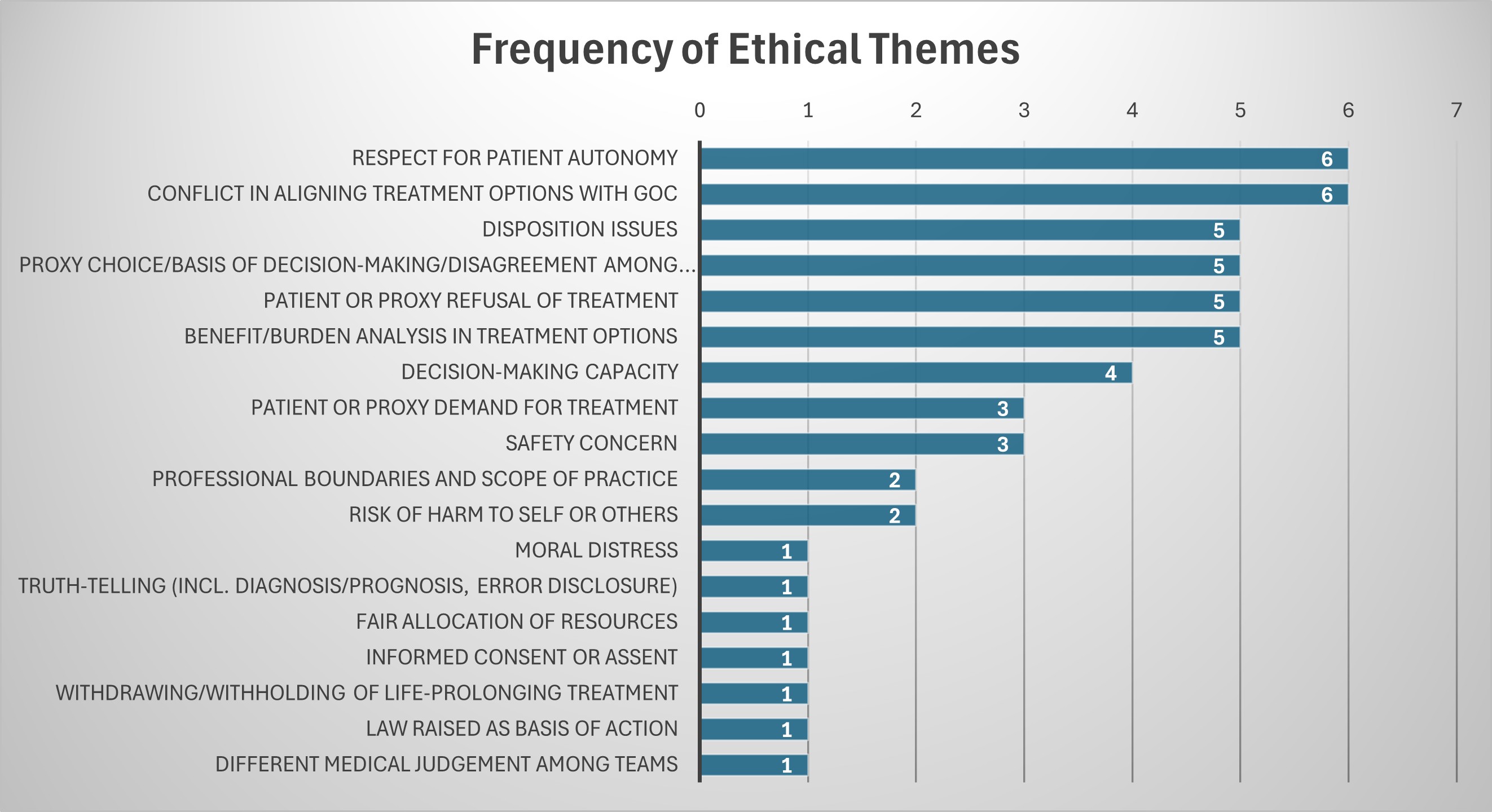
Results: Between January 2022 through September 2024 21 consults were requested on hospital medicine patients. Ethics consultants identified 18 different themes within these 21 consults. The most frequent themes were respect for patient autonomy and conflict in aligning goals of care with treatment options, followed closely by disposition issues, proxy issues, including proxy choice, basis of decision making and disagreement among proxies, treatment refusal, as well as benefit/burden analysis in treatment options. Other recurring themes included decision making capacity, demand for treatment, and safety concerns. All 21 consults reflected multiple ethical themes and it was common for the above themes to co-occur in one consult.
Conclusions: Data from this study reflect the social and ethical complexity of many hospital medicine patients as well as the special positionality of hospitalists in the healthcare system. The predominance of questions about autonomy, capacity and proxy choice reflect the vulnerability of many hospital medicine patients. Hospitalists deal with an acutely ill population where decision-making is often time sensitive yet face limited time to build trusting relationships with patients and proxies. This is reflected in the predominance of questions about care refusal and alignment of treatment options with goals of care. Additionally, because of the nature of their work, hospitalists may have an enhanced awareness of systems issues such as challenging dispositions. An analysis of ethics questions as well as themes that emerged in the course of ethics consults on hospital medicine patients can help identify high yield areas where education, policy and QI can help hospitalists better navigate ethical issues that arise in their work.