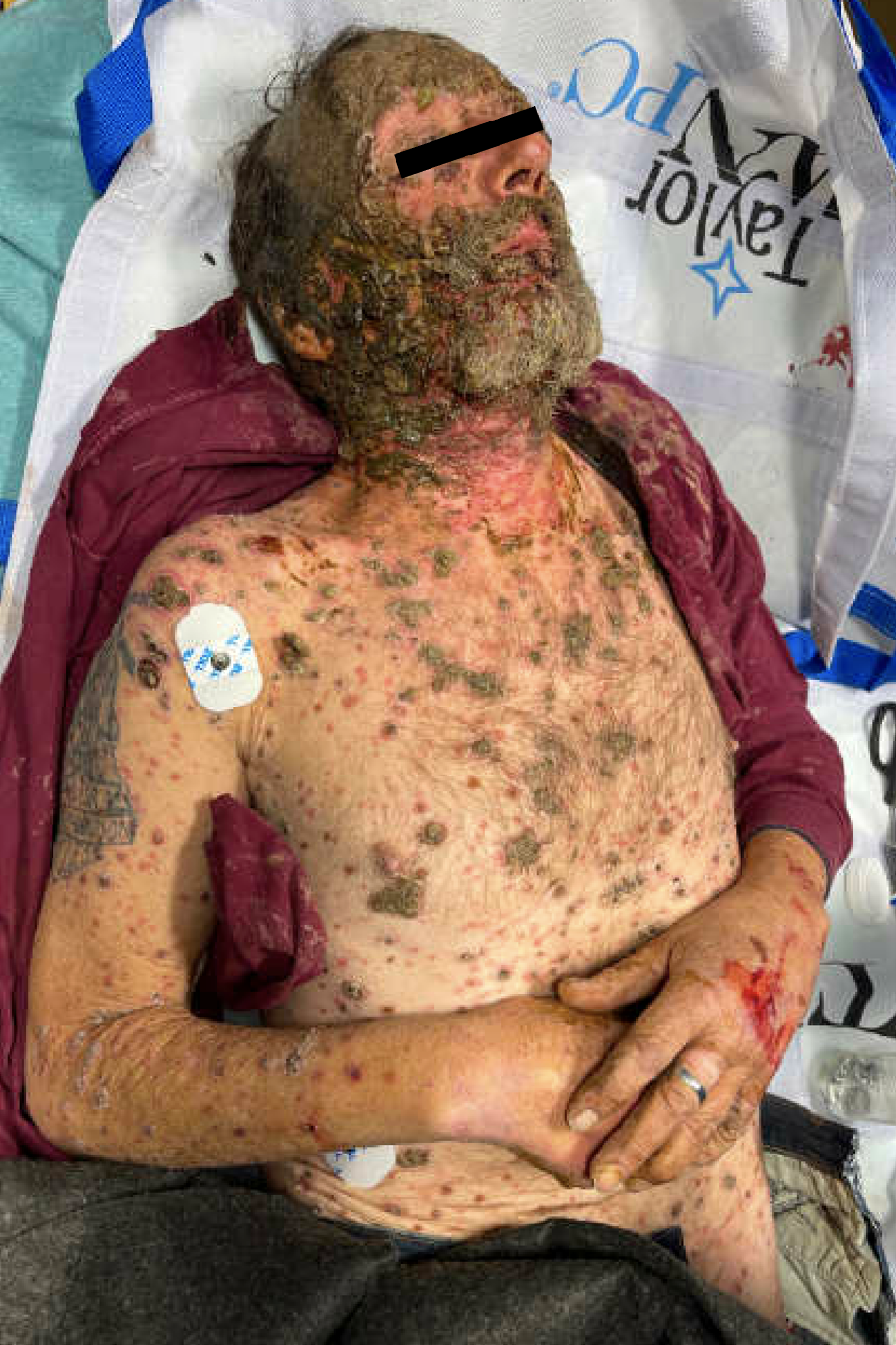
Case Presentation: Syphilis, caused by Treponema pallidum, remains a significant public health concern, with over 200,000 cases reported in the United States in 2023 (62.5 cases per 100,000 population)1. If not treated, the disease progresses through four stages—primary, secondary, latent, and late syphilis. A rare and aggressive form of secondary syphilis, malignant syphilis, is most commonly observed in immunocompromised individuals, particularly those living with HIV2. This variant is characterized by rapidly progressing, severe ulcerative cutaneous lesions and systemic symptoms.We present a 66-year-old unhoused male with substance abuse disorder admitted to the hospital with generalized malaise and body pain. He was noted to have ulcerated and crusted lesions throughout his body, with most severe on the face and scalp. He reported smoking fentanyl for symptom relief but denied intravenous drug use. He had not been sexually active for years until a single encounter one month prior to admission.Infectious workup revealed a positive syphilis screen with RPR titer 1:128, negative HIV antibody and viral load. Hepatitis C antibodies were reactive with negative RNA, and results consistent with past Hepatitis B exposure. Wound culture from the head lesions grew MSSA. Trunk lesion biopsy showed ulcerated granulomatous infiltrates with abundant plasma cells, compatible with syphilis; T. pallidum immunohistochemistry was negative.The patient received a single intramuscular dose of benzathine penicillin G (2.4 million units), 5-day IV antibiotic treatment with Cefepime, followed by surgical removal of extensive lesions on the head, torso, and lower extremities, leading to rapid lesion improvement (see photos). Due to the severity of the lesions and extent of the skin involvement, the patient spent almost 3 weeks in the hospital receiving wound care.
Discussion: Malignant syphilis is a rare, severe form of secondary syphilis that most often affects immunocompromised patients, particularly those with HIV. However, while commonly associated with HIV, cases have been described in immunocompetent patients with chronic comorbidities. Diagnosis can be challenging, as negative immunostaining for T. pallidum does not exclude disease3. Treatment remains the same as for secondary syphilis, with benzathine penicillin G, alongside supportive care and management of superimposed infections. Early recognition and treatment is the key given its rapid progression.
Conclusions: This case emphasizes the importance of early recognition of malignant syphilis, even in immunocompetent patients, and highlights the need for timely initiation of benzathine penicillin G and supportive interventions. Broader awareness is critical given rising syphilis incidence nationwide and the potential for atypical, severe presentations.
.png)