
Background: Hospitalists increasingly care for patients with complex behavioral, psychosocial, and chronic pain needs with limited support, which can erode professional satisfaction and contribute to burnout (1). In phase 1 of this project, we used mixed methods to identify patient types that hospitalists experience as most challenging: patients with chronic pain syndromes and frequent pain crises, patients with significant behavioral or safety concerns, patients with active serious mental illness, and patients with highly challenging family dynamics. Phase 2 focused on identifying and prioritizing concrete solutions to support clinicians in caring for these groups.
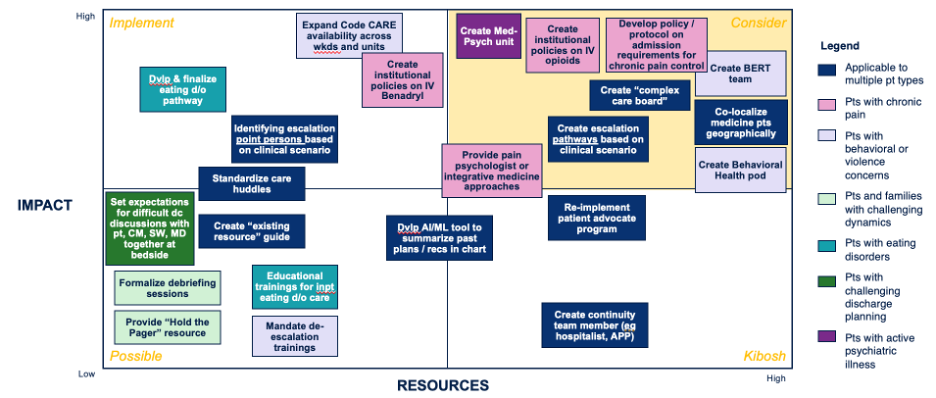
Methods: At a large urban academic medical center, we conducted in-person and virtual focus groups with a purposive sample of hospitalists, including a nocturnist and faculty across ranks, to map proposed interventions onto an impact–effort framework (PICK chart). We then distributed an electronic survey to all hospitalist attendings, asking them to rank solutions within the division’s direct control and at the broader health-system level. We performed descriptive statistics and inductive thematic analysis of open-ended responses.
Results: Thirty-nine hospitalists (22% response rate) completed the survey; 38% had 0–5, 36% had 6–10, and 26% had >10 years of experience in hospital medicine. Within the division, the highest-ranked solution was establishing a clearly identified “escalation point person” tailored to clinical scenario (e.g., chronic pain, aggression, complex family conflict), while mandated educational trainings (e.g., eating-disorder care) ranked lowest. At the health-system level, respondents prioritized developing a policy and protocol on chronic-pain admission requirements and de-prioritized creating a dedicated med–psych unit. Qualitative themes emphasized the importance of personalized care plans, emergency-department protocols for pain flares, expanded service-director responsibilities, and structured behavioral contracts.
Conclusions: Hospitalists caring for socially and behaviorally complex patients place highest value on timely access to expert back-up and clear institutional expectations for chronic pain admissions, rather than additional didactic training or new physical units. Using an impact–effort framework to prioritize solutions helped leadership focus on feasible early wins while planning for longer-term system changes. These findings are informing operational planning, internal grant proposals, and advocacy for multidisciplinary admission criteria and care pathways to reduce burnout and improve sustainability of hospital medicine careers.
.png)