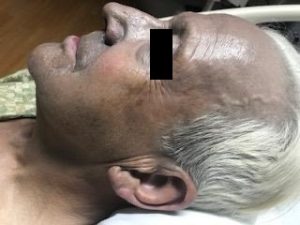
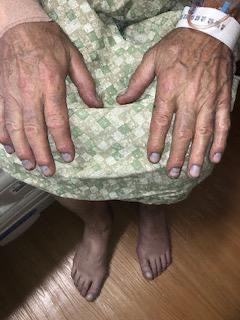
Case Presentation: A 65-year-old Caucasian male presented with progressive blue-gray skin discoloration over six months and new-onset dyspnea with leg edema. He had ingested approximately 2 ounces of colloidal silver daily for 12 years as self-prescribed prophylaxis against Lyme disease.Examination showed diffuse slate-gray discoloration, most prominent on the face, neck, and hands, bibasilar crackles, and peripheral edema. Laboratory testing revealed elevated BNP. Echocardiography showed an LVEF of 30% with global hypokinesis, consistent with heart failure with reduced ejection fraction (HFrEF). A skin biopsy confirmed argyria with dermal silver deposits.Chest radiography demonstrated cardiomegaly and pulmonary congestion. ECG showed sinus tachycardia with nonspecific ST-T abnormalities. Cardiac catheterization revealed non-obstructive coronary arteries and findings consistent with dilated cardiomyopathy.The patient was treated with diuretics, beta-blockers, and ACE inhibitors and was counseled to discontinue colloidal silver immediately. Laser therapy for discoloration was discussed but declined. He experienced recurrent heart-failure exacerbations over the following year; transplant evaluation was considered but not pursued due to age and patient denial.
Discussion: Argyria is a rare and irreversible pigmentation disorder caused by chronic silver exposure, most commonly from colloidal silver supplements promoted for unproven antimicrobial effects. Silver accumulates in the skin as silver sulfide complexes, producing permanent blue-gray discoloration. Diagnosis is largely clinical and confirmed by biopsy.Although often regarded as cosmetic, chronic systemic silver accumulation can cause organ dysfunction. In rare cases, silver may exert cardiotoxic effects through oxidative stress, mitochondrial injury, and disruption of cellular ion balance, potentially contributing to myocardial dysfunction and arrhythmias. This patient’s presentation of non-ischemic cardiomyopathy with long-term excessive silver ingestion suggests a possible association.Management focuses on immediate cessation of exposure, as there is no reliable method to reverse pigmentation or systemic toxicity. Laser therapy may provide partial cosmetic improvement but is inconsistent and costly. Cardiovascular complications require guideline-directed heart-failure therapy, though prognosis depends on the severity of myocardial involvement and chronicity of exposure.This case highlights the dangers of unregulated health supplements and the need for clinicians to recognize alternative-medicine–related toxicities.
Conclusions: This case underscores the importance of clinician awareness of argyria and its potential systemic complications, including heart failure associated with chronic colloidal silver ingestion. Recognition of characteristic skin findings, confirmation with biopsy, and counseling on cessation of silver exposure are essential. Clinicians should educate patients on the risks of unproven supplements and promote evidence-based approaches to disease prevention. Regulatory efforts and public education remain critical to reducing preventable cases of silver toxicity.