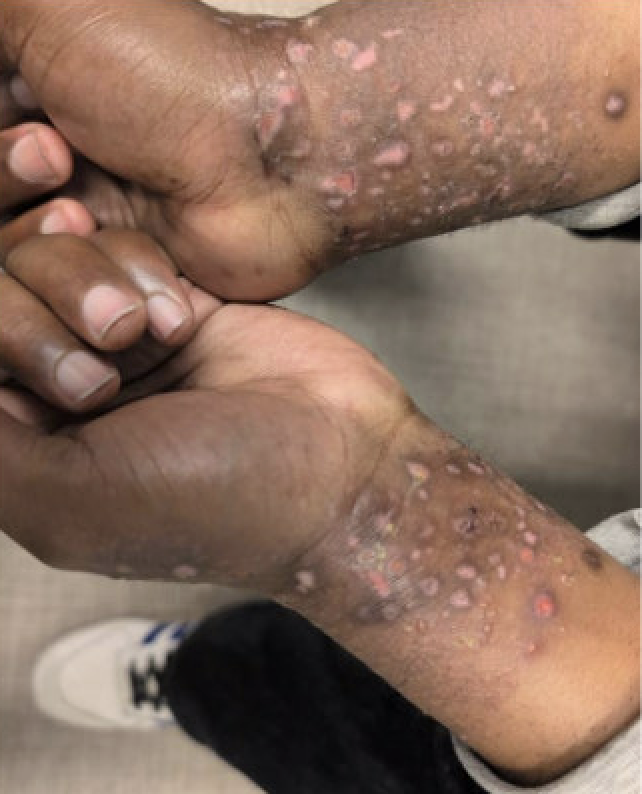
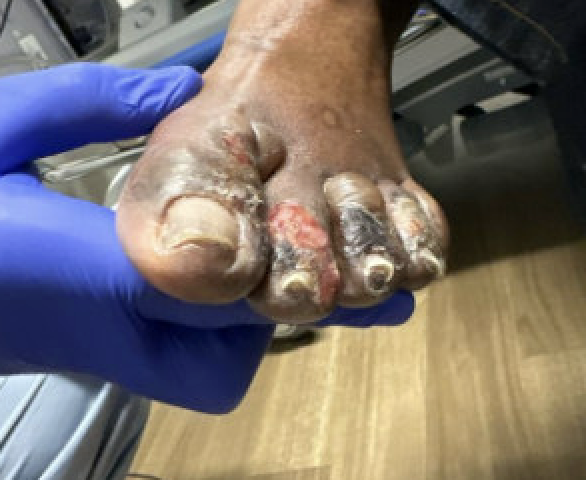
Case Presentation: Bullous pemphigoid (BP) is an autoimmune subepidermal blistering disorder caused by autoantibodies targeting hemidesmosomal proteins BP180 and BP230 at the dermal–epidermal junction. Although classically idiopathic, BP can be drug-induced. Agents including diuretics, antibiotics, DPP-4 inhibitors, and more recently, GLP-1 receptor agonists, have been implicated. We report a case of tirzepatide-induced bullous pemphigoid, an association that remains rarely documented in the literature.A 46-year-old man with chronic kidney disease stage 3b, type 2 diabetes mellitus, and positive antinuclear antibodies (ANA) and anti–Sjögren’s-syndrome-related antigen A (SSA) antibodies was transitioned from sitagliptin to the GLP-1 receptor agonist tirzepatide (Mounjaro) 2.5 mg weekly to improve glycemic control. Shortly after initiation, he developed a diffuse, pruritic rash that progressed to tense bullae over the extremities, abdomen, and groin while sparing mucous membranes (Figures 1 and 2).Laboratory studies revealed an elevated eosinophil count of 12.6% and an elevated erythrocyte sedimentation rate of 43 mm/hr. Skin biopsy demonstrated subepidermal bullous change with eosinophil-rich perivascular dermatitis, consistent with BP. No other new medications or exposures were identified. Tirzepatide was discontinued, and the patient was started on systemic prednisone, doxycycline, niacinamide, and bi-weekly dupilumab injections under dermatology supervision. The rash resolved with residual post-inflammatory hyperpigmentation, confirming a diagnosis of drug-induced BP secondary to tirzepatide.
Discussion: This case highlights a novel and clinically significant presentation of tirzepatide-induced BP, contributing to the emerging recognition of GLP-1 receptor agonists as potential triggers of autoimmune blistering disorders. The temporal relationship between drug initiation and symptom onset, histopathologic confirmation, absence of other culprit medications, and resolution after discontinuation collectively establish a strong causal association.While DPP-4 inhibitors are well known triggers of BP, reports of GLP-1 receptor agonist associated BP remain rare. The pathogenesis may involve drug induced alteration of hemidesmosomal antigens BP180 and BP230, leading to autoimmune activation in genetically susceptible hosts. Our patient’s ANA and SSA positivity likely amplified this susceptibility, illustrating the interplay between drug exposure and autoimmunity.
Conclusions: Recognition of this association is essential as tirzepatide use expands for diabetes and obesity management. Misclassification of early BP as erythema multiforme or a drug rash can delay appropriate treatment. Prompt dermatologic evaluation, biopsy, and discontinuation of the offending agent are critical. Clinicians should consider drug-induced BP in patients who develop bullous eruptions shortly after starting incretin-based therapies, particularly those with autoimmune markers or chronic kidney disease, which may alter immune regulation and drug clearance.