Background: Transitions of care (ToC) programs are important for patient safety, but their implementation and success remain highly variable across U.S. hospitals, particularly for patients with multimorbidity and health-related social needs (HRSNs).(1-4) Hospitalists, as key decision-makers at discharge, encounter firsthand the factors that hinder the success of ToC programs.(5)
Methods: Rapid qualitative study featuring virtual focus groups.(6) Participants were members of the Hospital Medicine Reengineering Network (HOMERuN). Data were analyzed using a mixed inductive-deductive framework to identify key themes.(7.8)
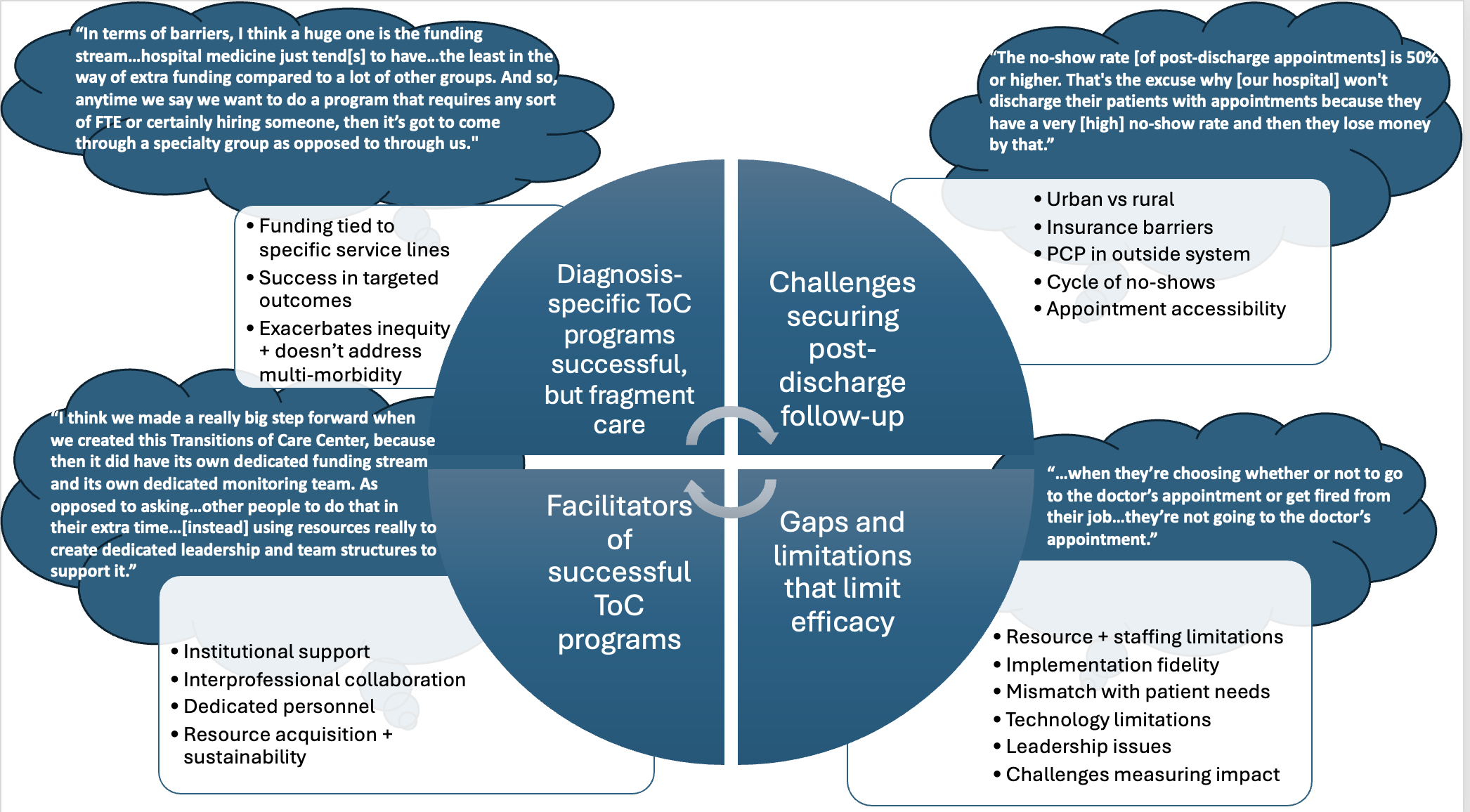
Results: Twenty-two individuals from nineteen different organizations participated in focus groups. A comprehensive ToC program was not offered by any of the participating organizations. Four major themes emerged: (1) Diagnosis-specific ToC programs are effective but contribute to care fragmentation, particularly for patients with multimorbidity; (2) Post-discharge follow-up is hindered by limited appointment availability, insurance barriers, and geographic challenges; (3) ToC programs often fail to address patient preferences, HRSNs, and health literacy, and lack adequate resources and leadership support; (4) Successful programs require institutional commitment, dedicated funding, interprofessional collaboration, and community engagement. Participants emphasized the need to prioritize patient-centered care over financial return on investment.
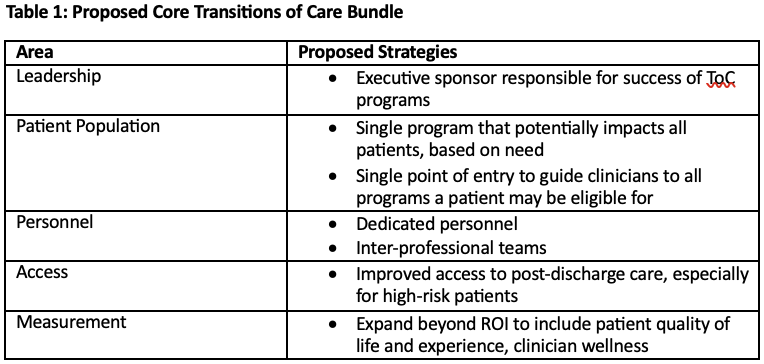
Conclusions: Current ToC programs are fragmented, undermining safe and equitable transitions. Addressing HRSNs, fostering leadership support, and prioritizing patient-centered care over short-term financial metrics are essential for improving ToC outcomes.